How to Make Six Figures in a Month with Bananas? (Full Process Summary)
I collected the final payment two weeks ago and kept saying I'd summarize and review, but kept putting it off 🤪🤪
Last December was the hottest month for nano banana pro.
If you scrolled through Twitter, everyone was playing with bananas. Many Twitter users built their accounts directly from this wave.
But during this hottest month, I posted very little on Twitter, and didn't even get the basic subsidy from Elon.
What was I doing? I was making trading cards.
And just by doing that, I pulled my monthly income into six figures in one month.
Oh, by the way. My main job isn't as a designer, nor am I in a related industry. I never thought I'd one day make a living from this 🤣 This is probably the charm of the AI era!
1. Reason: Why I Targeted Trading Cards
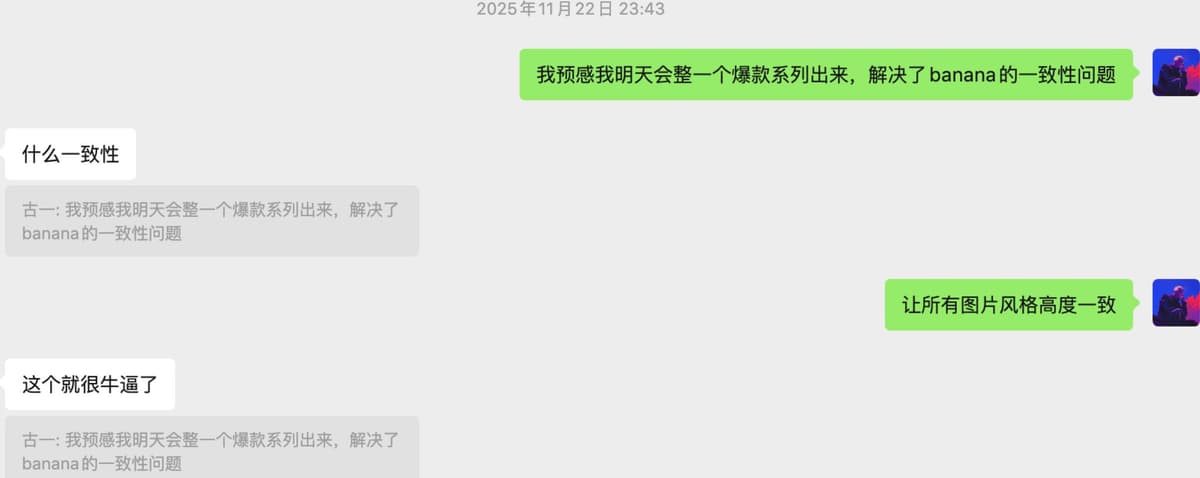
The day after Banana Pro was upgraded, I started testing its multi-image consistency.
That ability for "multiple images of the same character to have a stable appearance and stable style" — once it's stable enough, it's not just for fun posting images; it can generate revenue.
The first thing that came to my mind was TCG cards.
The reason is simple:
Cards are essentially "batch production + unified standards + printable + listable."
They are not art; they are industrial products.
Industrial products can be quoted, contracted, and delivered per piece.
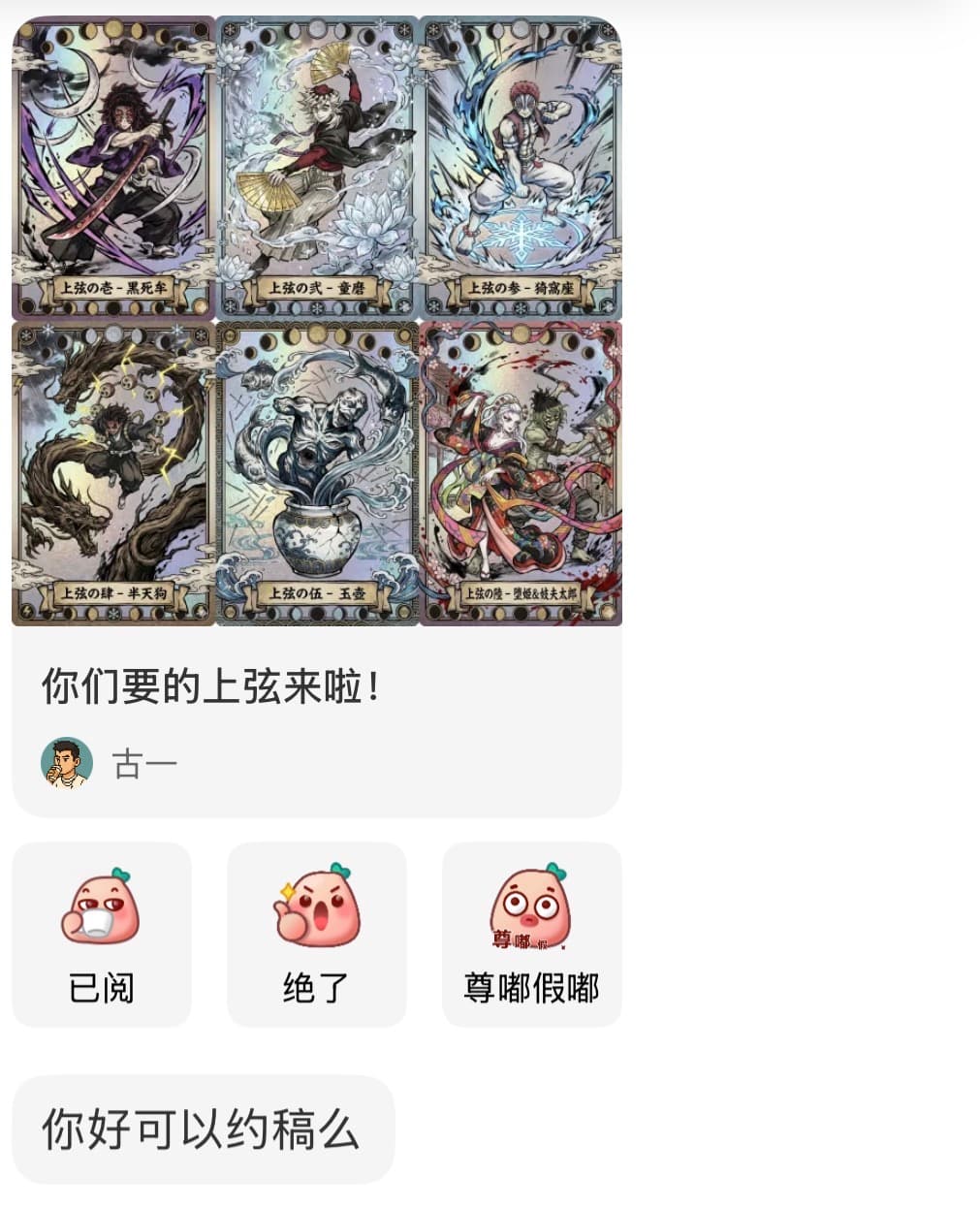
I first made a set of Ukiyo-e style Demon Slayer cards. Before posting, I knew it would be a hit. (I should be the pioneer of the NBP TCG card set gameplay. Later, I saw many people making cards based on my framework, even keeping the Ukiyo-e + holographic flash card effects unchanged.)
Under this prompt framework, the card faces were very stable: the same art style, the same vibe, and the characters didn't wander off.
After Demon Slayer became popular, I replicated the method and made series for Dragon Ball, Naruto, One Piece, Saint Seiya, and even NBA star cards.
Then came the question: How to monetize this?
2. X for Exposure, Xiaohongshu for Closing Deals
After posting on X, I immediately synced to Xiaohongshu. At that time, I only had a few hundred followers on Xiaohongshu, but they were very targeted.
More importantly, Xiaohongshu easily attracts a specific type of person: merchants who make physical merchandise.
Over time, no fewer than 20 merchants contacted me.
But not every order could be taken. The biggest reason: many merchants wanted to create derivative merchandise for major IPs but didn't have the copyright.
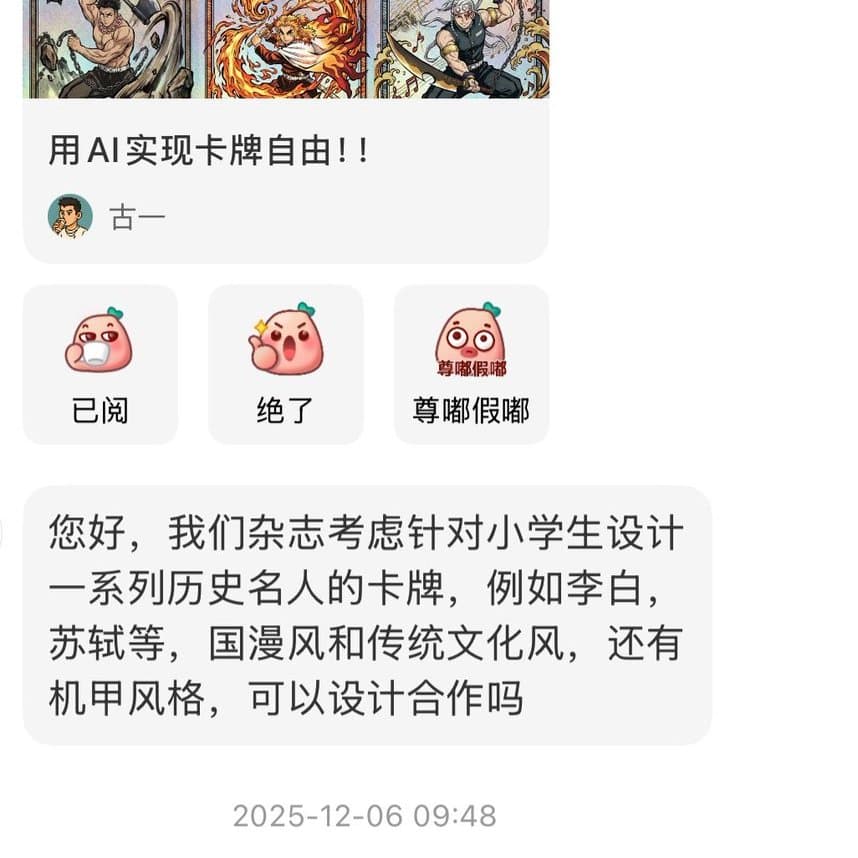
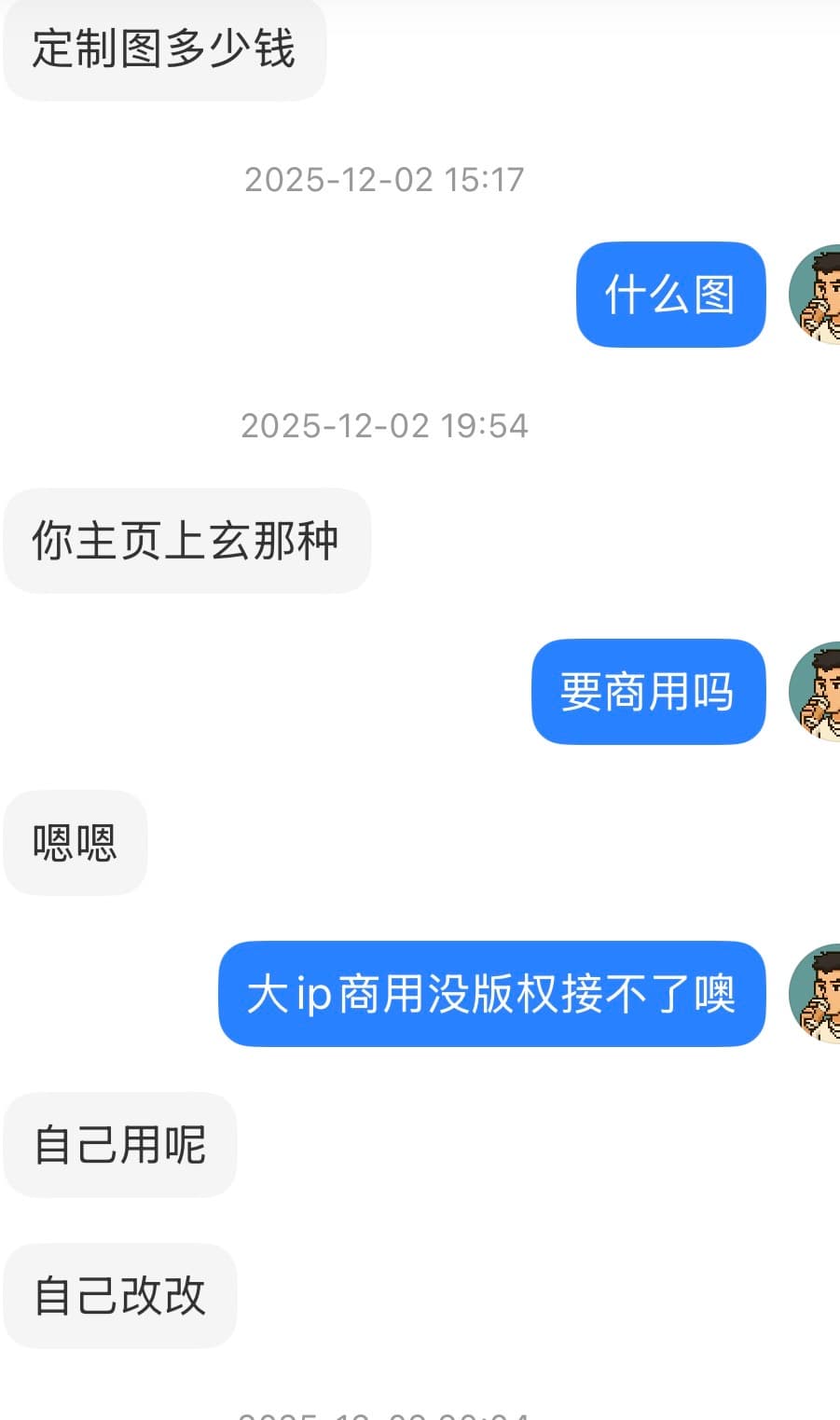
The most memorable was the first merchant who contacted me. They sold anime merchandise on Douyin, with annual sales in the tens of millions. The cooperation model they offered had three options: payment per piece, sales commission, or base fee + sales commission.
It was my first time taking such an order, and they wanted 150 pieces right off the bat. Honestly, I was a bit excited. They discussed the third option: base fee + 20%~30% commission, and even drafted the contract.
But many group members warned me about the risk of infringement. I directly asked the merchant: "You don't have a license for this, aren't you afraid of being sued?"
The merchant replied pragmatically: They said they had never been sued, and even if competitors were sued, they just paid fines. Even if sued, the copyright holder would go after the producer first, not me. The contract would state that the producer bears full responsibility.
Then they wanted me to work on typical major IPs like Demon Slayer and Pokémon.
I thought I couldn't just rely on their words; I needed to understand the pros and cons clearly.
3. A Lawyer's Words Pulled Me Back from the Brink
I specifically consulted a lawyer friend. Their advice was: Don't touch it.
The reasoning was straightforward: You are a link in the profit chain. Just because the contract says "you are not liable" doesn't mean you can wash your hands of it. It's like two people agreeing to sell a homeowner's house without the owner's permission — does that seem reasonable to the owner? The law would hardly recognize such a "self-exculpatory" arrangement.
I also asked a more practical question: They sell millions on Douyin with hot major IPs like Demon Slayer and Pokémon — won't they really get sued?
The lawyer friend said this is standard practice in intellectual property: It's not that they won't sue; the time hasn't come. "Let the bullet fly for a while." Once the scale is big enough and the evidence is solid enough, the copyright holder will strike.
That completely calmed me down. I held my ground and gave up on that order.
Here's another pitfall-avoiding tip about licensing:
I also encountered some who claimed they had a license, but was it really an official direct license? Not necessarily.
Ask them to show you the license agreement, and check the licensing chain.
Focus on one point: Is this license a direct authorization from the "Japanese official/copyright holder"? If the license was given to them by a domestic company, they are likely a secondary (or even lower) agent.
Normally, secondary agents cannot outsource the license to others.
Only the general agent level can typically authorize others. Many secondary agents like to "outsource one layer," and some don't even have a license and just photoshop one.
If the license they outsource is invalid, and you take the order, you'll be in a very passive position if copyright issues arise later.
So now, when I take such orders, my first question isn't about the price, but: "Send me the license and the licensing chain for compliance filing."
Either they can produce it, or they start to evade. If they start evading, I basically stop negotiating.
4. The First Truly Implemented Project: Three Kingdoms
With the previous experience, whenever someone approached me for major IPs without a license, I directly refused.
The first truly implemented project was indeed a major theme, but it had no clear copyright holder: Three Kingdoms.
This client also found me on Xiaohongshu. They were very straightforward, and the deal was closed in just a few sentences.
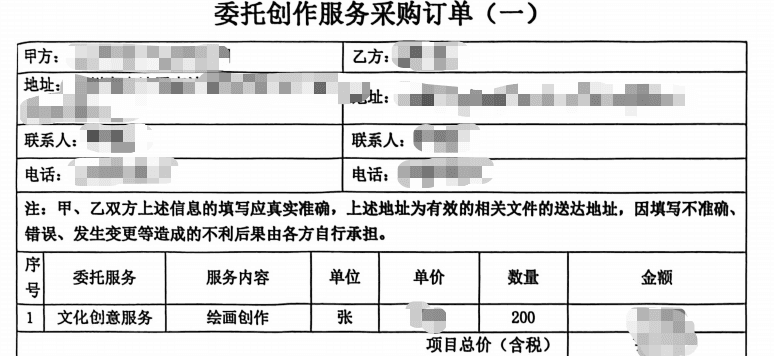
But reviewing the contract took three or four revisions — the most laborious part in the early stage.
Because they provided a general contract template full of unfair clauses. Just one example shows how absurd it was:
"If the work provided by Party B does not meet Party A's requirements and is revised more than 3 times, it shall be deemed a fundamental breach by Party B. Party B shall refund all fees and pay Party A liquidated damages equal to twice the commissioned creation fee."
Isn't that nonsense?
The acceptance criteria were abstract and subjective. You put in the labor time, but how can the other party just say "not satisfied" and you have to refund and pay compensation?
There were many similar clauses. Luckily, I had my lawyer friend review the contract clause by clause; otherwise, I could have easily fallen into a big trap.
Although in hindsight, this client was actually very nice, you can't gamble on someone's character with contracts.
5. When Taking AI Design Orders, These Two Things Must Be in the Contract
First: Clearly Define Acceptance Criteria
Similar things have happened in our community: Someone happily takes an order, but the client is never satisfied and asks for endless revisions, leading to endless disputes.
So now, before signing a contract, I always clarify the acceptance criteria. I add a supplementary clause to the contract, the core of which is:
If you don't write this clearly, you will suffer later.
Second: Originality Statement and Responsibility Boundaries
The biggest difference between AI creation and manual creation is: AI's training data is provided by the tool service provider, and Party B cannot verify the compliance of each piece of data one by one.
What you can guarantee is "compliance of the creation process" (using compliant models, not adding infringing materials, performing necessary plagiarism/reverse checks), but you cannot control the inherent uncertainty of the technology itself or Party A's usage scenario.
This must be clearly stated. Don't let Party B bear full responsibility, otherwise it's equivalent to making Party B pay for uncontrollable risks.
Also, I am very careful when creating images myself. Although the Three Kingdoms theme itself has no copyright holder, many later derivative designs of the Three Kingdoms theme may involve design patents or identifiable commercial assets.
When using AI to generate images, you must do reverse checks, especially to avoid coinciding with mature designs from major companies.
6. Why I Thought a Month Was More Than Enough, But Reality Hit Hard
The contract stipulated one month. I thought it was more than enough because before signing the contract, I spent half an hour generating 200 images.
Later, I proved myself completely wrong.
Because "generating 200 images" is not hard; the hard part is generating 200 images "that can be delivered." What really consumes time is iteration, retouching, standardizing specifications, standardizing styles, and dealing with various absurd little bugs.
Image generation tool: Lovart @lovart_ai @lovart_jp
Lovart is an absolute productivity tool for me.
Its key features are concurrent image generation + unlimited 2K output, plus some very practical small tools.
At the time, there was a Black Friday 60% discount, so I directly subscribed to the Pro tier (one month), costing around 400-500 RMB.
Prompt engineering: Codex
The overall framework uses a three-layer architecture:
For each session, I first give the system prompt, then concurrently generate multiple cards. The structure of each card is:
[Faction OVERLAY] + [Card Description] + [GLOBAL_LOCK]
There's a small pitfall here. I initially thought I could borrow programming concepts to save effort:
For the same faction, [Faction OVERLAY] and [GLOBAL_LOCK] are the same, like global variables. Could I declare them once at the start of the conversation and just reference them later?
The answer is no.
When Lovart spawns sub-threads to generate images, each sub-thread cannot stably access these global variables. So in the end, I had to write the full prompt for each card.
The result was that each card's prompt was very long. I could write at most five at a time; any more would exceed Lovart's context limit.
Was generating five at a time fast enough? No.
I would open five sessions simultaneously, three dedicated to generating images and two dedicated to modifying images.
7. Hard Requirements for Commercial-Grade Cards: Borders and Nameplates Must Be Highly Consistent
Another difficulty in card making is the borders and nameplates. To reach commercial grade, the style and dimensions must be highly consistent.
If you add border and nameplate descriptions in each card's prompt, even if you write them identically and specify the font size and typeface, you still can't make each one exactly the same. Because prompts and final output are not a one-to-one relationship.
Look at all the cards I've produced before, including those made by others using my framework. If you look closely, the borders and nameplates on each card will vary. If you generate them in the same session, the effect is slightly better, but this is not suitable for large-scale rapid production.
So how do you achieve consistency using an AI-native approach?
Layering + Compositing
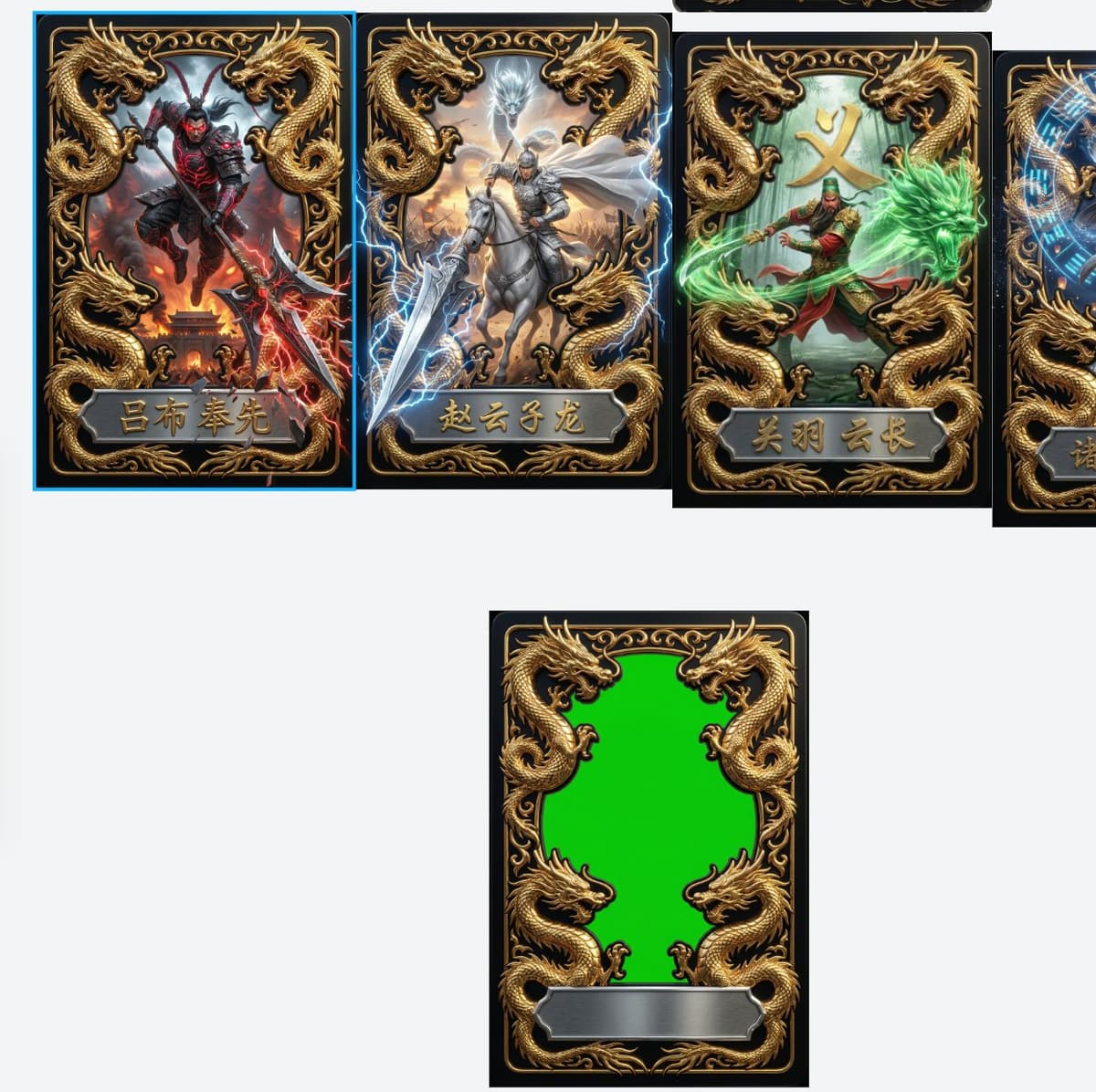
Experiment piece, the border is ugly, please ignore it. I'm just giving an example, haha
The border and nameplate are fixed containers. You run it globally once to generate a card "container" with fixed dimensions and style.
Then, for each card, you only generate the original artwork. Finally, composite the original artwork + container. This ensures that the borders of each card are highly consistent.
But the best method is still to add them directly in post-production using Photoshop.
8. The Three Kingdoms Theme Is Much Harder Than Major IPs
For major IPs like Demon Slayer or Naruto, the model itself has ingested a large amount of data. The characters' appearances and features are already designed, making it very easy to generate such images.
But Three Kingdoms is different.
First, there are too many derivative works of the Three Kingdoms theme. Each derivative work designs the same character differently, so the model easily "mixes" them.
Famous figures are fine, like Guan Yu, Zhang Fei, and Zhao Yun—everyone has a stereotype in mind, and the model is similar: Guan Yu with long beard, red face, green robe, and the Green Dragon Crescent Blade.
But we need to make 200 Three Kingdoms characters, with each faction averaging forty to fifty. Later, we simply can't come up with that many, so we can only make rare cards of the same character.
For less well-known figures in films and games, like Wang Ping, Zhang Ni, and Peng Yang, you have to design them yourself based on their story background, ensuring their clothing, headgear, beard, facial features, and posture are all distinct. This is very time-consuming.
So earlier when I said I could generate 200 images in half an hour, in reality, most of them couldn't be delivered.
The entire card set also has two style challenges: overall consistency + faction differentiation + no similarity within a faction.
Two things need to be solved simultaneously:
My strategy is: for each faction, design a layer of overlay from four dimensions—theme, color, pattern, and scene—so that for every card, even without looking at the name, you know which faction it belongs to.
For example, for Eastern Wu, my design was:
IX. Problems I repeatedly encountered during image generation: this is actually about exploring the boundaries of Banana
The entire production process was also about exploring Banana's capabilities and limits.
Let me list some very common problems I encountered:
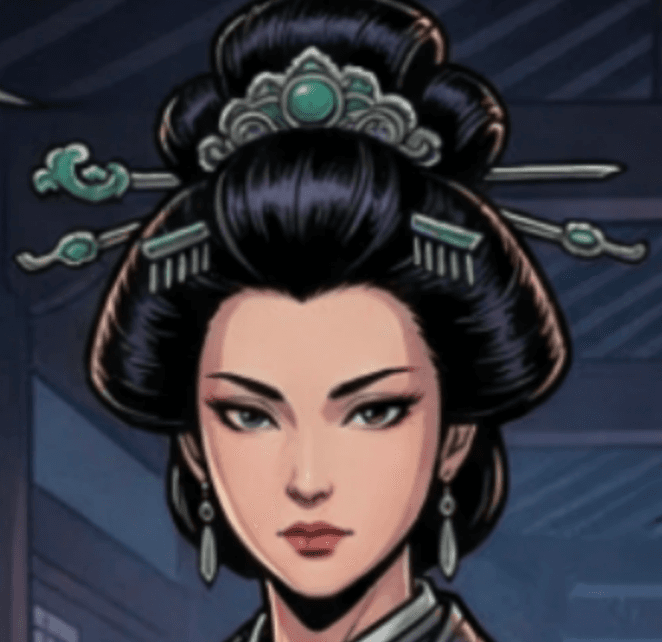
Clearly wrong hairstyle
Here I have to be honest: the client is really meticulous and can spot many small details.
So after generating a batch of images, I often have to revise them 2 to 3 times.
The first batch has the most issues. After that, I add all the problems I've encountered into the prompt constraints, and the issues gradually decrease.
X. The most time-consuming part isn't generating images; it's revising them
Speaking of revisions, they often take more time than generating.
There's a pitfall with Banana that I must emphasize:
If you revise the same image more than twice in a row, you'll notice a clear loss in quality and detail. It feels like the image gets blurrier with each edit.
The reason is simple: each revision is a regeneration. Each generation incurs some loss, and consecutive revisions stack the losses. My experience is that you can't exceed two revisions; otherwise, it's unusable and beyond saving.
So when the client sends back an image for changes, I try to make all the edits at once on the original image.
If some images can't be fixed, I just regenerate them.
XI. 500 yuan monthly fee + daily after-work time, bringing in six-figure income
Throughout December, I took on three such projects, generating about two to three thousand images in total.
My investment was around 500 RMB in tool fees, plus daily after-work time. The return was a six-figure income, and one client is already preparing to collaborate again.
In terms of return on investment, Lovart's monthly fee is a bargain. If that's not a godsend for the poor, what is?
Thanks, Lovart. Thanks, Banana.
XII. Summary
First, you must do Xiaohongshu, and it has to be niche.
Broad traffic isn't valuable. Xiaohongshu has many monetization touchpoints, and it's easy to meet real merchants.
Second, pay attention to copyright issues.
If you ignore copyright, you can indeed rake in money, but I still suggest sticking to ethical boundaries.
Okay, finally,
If you want to collaborate, feel free to message me privately.
If you want to exchange ideas, you're welcome to join the top AIGC creation community, VibeShotClub.