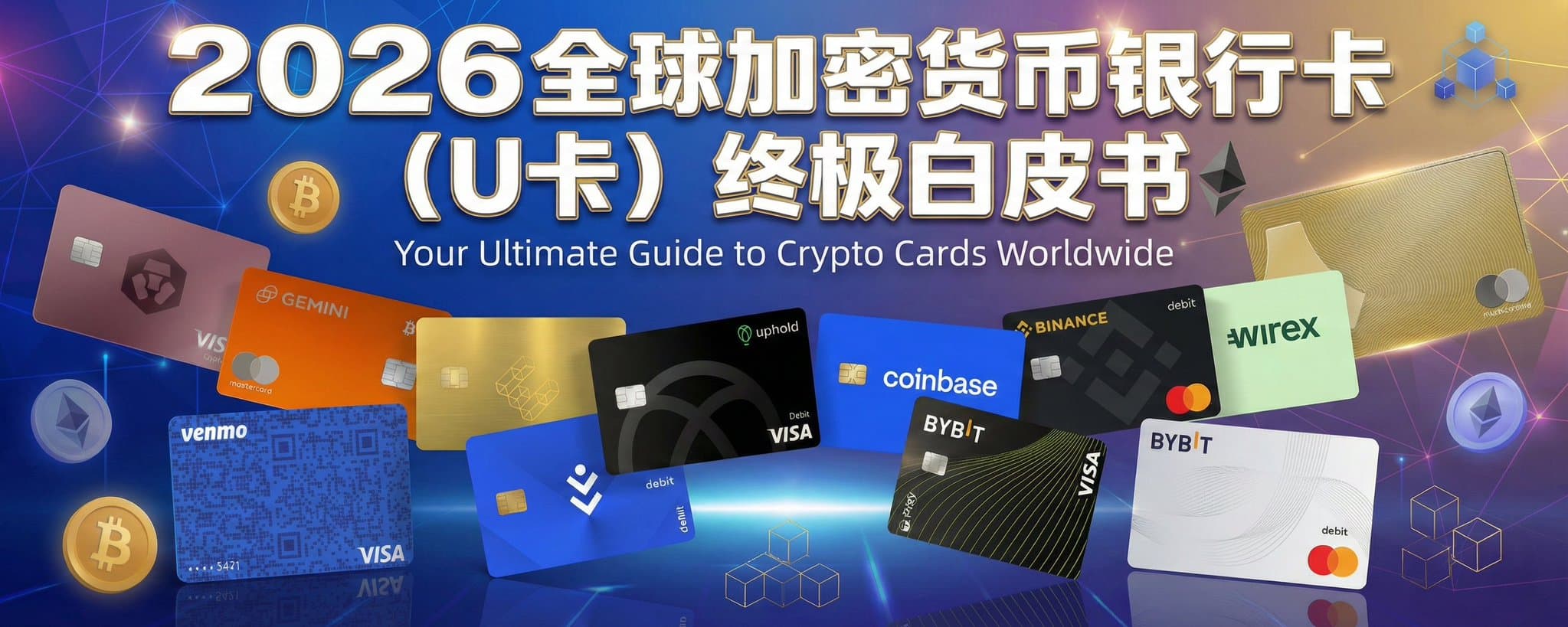
Spanning reviews of 31 U-cards, which is the hottest, which is the worst? Let's take a look!
In 2025, the U-card market has evolved from a simple cash-out tool to an asset appreciation tool. The well-known crypto data institution The Block recently conducted a rigorous rating of mainstream crypto debit and credit cards worldwide.
This evaluation does not look at the advertised "maximum returns," but is based on effective yield—that is, the actual returns users can pocket after deducting hidden fees, exchange rate spreads, monthly fees, and token staking costs.
Below is an in-depth analysis of all listed cards, arranged from highest to lowest score.
Tier 1: The King's Choice (Score 4.0 - 4.4)
Cards in this tier are not just payment tools; they are wealth management products. They typically feature low fees, high net returns, and excellent security mechanisms.
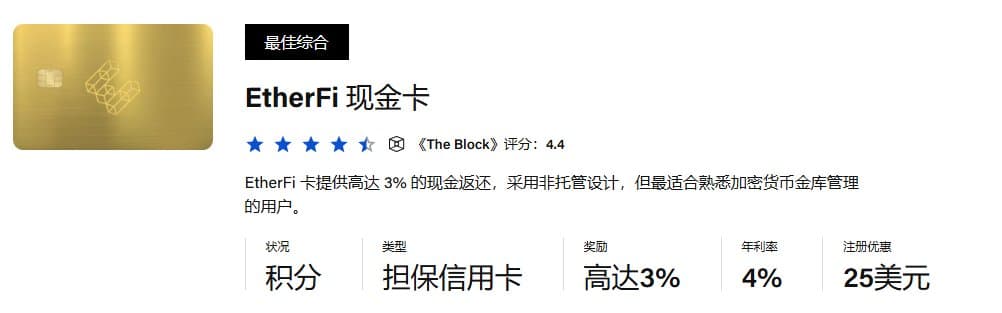
EtherFi Cash Card (👑 Overall Best)
Score: 4.4
Type: Secured Credit Card
Core Highlight: Non-custodial + 3% Cash Back
In-depth Analysis: This is the benchmark product on the market. Its killer feature is non-custodial—your funds are not stored in the card issuer's account but are held on-chain as collateral. This means that even if the issuer goes bankrupt, your assets remain safe. It offers up to 3% cash back, not limited to specific categories.
Target Audience: DeFi power users, high-volume consumers who highly value asset security.
Gemini Credit Card (Best Sign-Up Bonus)
Score: 4.2
Type: Credit Card
Core Highlight: Instant Rewards + No Annual Fee / No Foreign Transaction Fee
In-depth Analysis: A product from the US compliant exchange Gemini. The biggest advantage is that rewards are credited "instantly" (cash back upon swipe), and you can choose from dozens of tokens such as BTC, ETH as rewards. It claims up to 4% cash back (dining), 3% on gas, and 1% on other purchases. Although the comprehensive return rate is about 1.5%-2%, it wins on full compliance and no hidden fees.
Target Audience: US and overseas Chinese users who seek compliance and don't want to deal with on-chain operations.
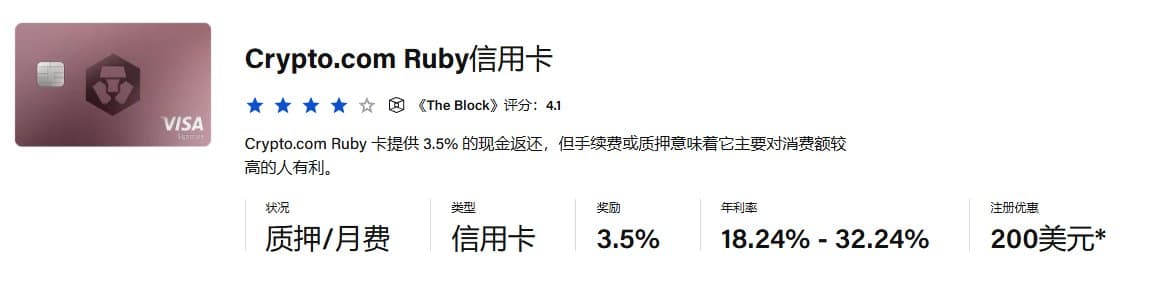
Crypto-com Ruby Credit Card (Top Choice for High Net Worth)
Score: 4.1
Type: Credit Card
Core Highlight: 3.5% Cash Back
In-depth Analysis: Crypto-com is a veteran card issuer, and this is its credit card version. Although the return rate is as high as 3.5%, it requires deep integration into its ecosystem (staking CRO tokens). The Block believes that only if you are already a high-frequency trader or a large CRO holder will the card's returns cover its staking costs.
Target Audience: Loyal users of the Crypto-com ecosystem, high-frequency consumers.
Gnosis Pay Card (Best Self-Custody)
Score: 4.0
Type: Debit Card
Core Highlight: Web3 Native + Direct Safe Wallet Connection
In-depth Analysis: A truly decentralized card. It connects directly to your Safe smart contract wallet. If you hold GNO tokens, you can unlock up to 4-5% rewards. It is one of the smoothest bridges between the DeFi world and the real world.
Target Audience: DeFi whales, DAO members, on-chain purists.
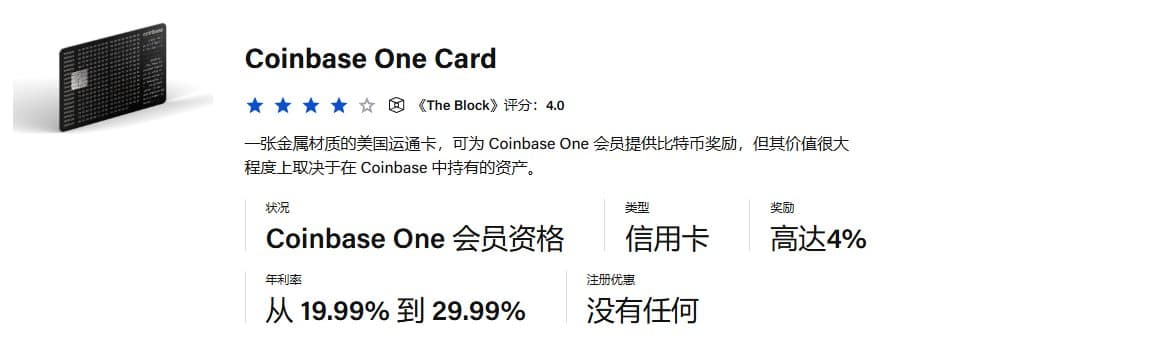
Coinbase One Card
Score: 4.0
Type: Credit Card
Core Highlight: Metal Card + Amex Network
In-depth Analysis: A metal American Express card designed exclusively for Coinbase One subscription members. It offers Bitcoin as spending rewards. Its value is highly dependent on the size of assets you hold on Coinbase and your membership tier.
Target Audience: Heavy Coinbase users, those who like the feel of a metal card.
Uphold Essential Card
Score: 4.0
Type: Debit Card
Core Highlight: XRP Cash Back
In-depth Analysis: Allows users to directly spend assets in their account. Offers up to 4% XRP cash back for the first 90 days, then drops to 2%. For the XRP community, this is the strongest faith-recharging card.
Target Audience: XRP holders (Ripple Army).
Ready Metal Card (Best Discount)
Score: 4.0
Type: Debit Card
Core Highlight: 3% STRK Cash Back + Partner Discounts
In-depth Analysis: Another excellent self-custody card. Besides offering 3% STRK token cash back, it also features exclusive partner discounts (e.g., subscription service discounts).
In-depth Analysis: Another excellent self-custody card. In addition to offering 5% real-time interest on USDE, it also features exclusive partner discounts.
Cards in this tier each have their own features, but have some flaws in fees, return caps, or ease of use, preventing them from reaching the top tier.
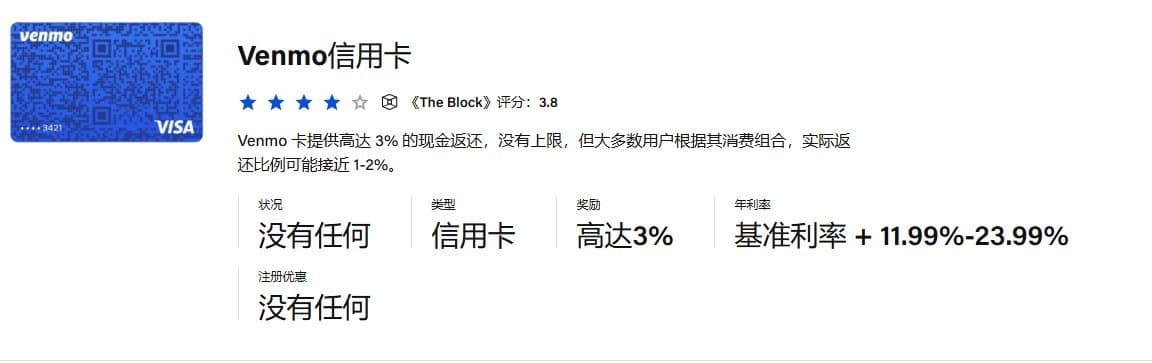
Venmo Credit Card
Score: 3.8
Analysis: An attempt by traditional financial giant Venmo. Offers up to 3% cash back and can automatically buy cryptocurrency. The downside is that it's not a pure U-card; it's more of a fiat card with crypto features, with an actual average return of around 1-2%.
Bybit Card
Score: 3.7
Analysis: Advertised as "up to 10% cash back," very tempting. The downside is that this 10% has extremely high thresholds and monthly caps, and there are certain transaction fees. The actual return experienced by ordinary users is about 2-4%.
COCA Visa Card
Score: 3.6
Analysis: A Visa card combined with a self-custody wallet, claiming up to 8% cash back. The downside is the complex tier system and token staking requirements, causing the "real return" to fluctuate greatly.
MetaMask Virtual Card
Score: 3.6
Analysis: The official card from MetaMask, directly spending coins in the wallet, very convenient. The downside is that rewards are only 1%, and some transactions incur gas fees or processing fees, lowering overall cost-effectiveness.
Payy Card (Best Privacy)
Score: 3.6
Analysis: Focuses on privacy and a cool glowing card design. The downside is the current lack of a competitive rewards mechanism; it falls short in "earning money" compared to other cards.
Bleap Card
Score: 3.6
Analysis: Non-custodial card offering a clean 2% USDC cash back with no foreign transaction fees. The downside is a monthly spending cap, limiting profit potential for high-volume consumers.
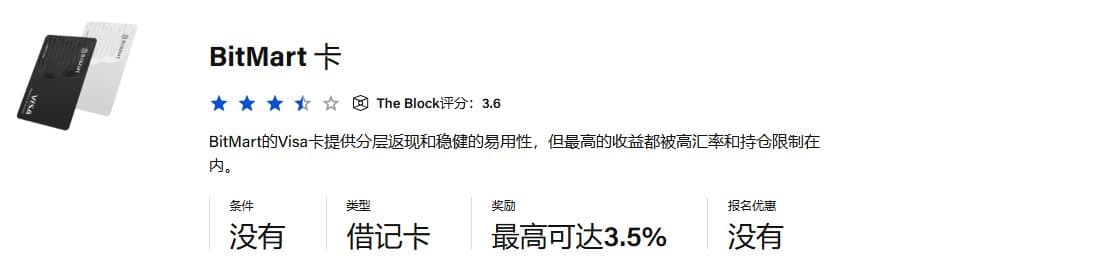
BitMart Card
Score: 3.6
Analysis: Offers up to 3.5% cash back. The downside is that high percentage returns are locked behind high-frequency trading requirements and platform token holdings, unfriendly to ordinary retail users.
Plutus Card
Score: 3.5
Analysis: Popular in Europe, claiming 3% cash back. The downside is its subscription fee model and complex cash back caps, causing the actual net return for ordinary users to be diluted to 0.75-1.5%.
Tier 3: Specific Niches and Basic Tools (Score 3.0 - 3.4)
Cards in this tier are either just starting out (points-based), have high fees, or offer no cash back at all, mainly serving as channels for fund transfers.
Solayer Emerald Card (3.4)
Analysis: Combines DeFi yields and spending rewards. The downside is that rewards are currently mainly reflected as "points" with unclear value, and the fee structure is unfriendly to non-Solayer native users.
Kast Card (3.4)
Analysis: A reward system based on a future token $KAST. The downside is that it is more of a "pie in the sky," with uncertain actual value upon receipt, and the token has a lock-up period.
Bitget Wallet Card (3.3)
Analysis: Extremely easy to use but yields no returns. Supports widespread spending via Visa/Mastercard with zero fees within limits. However, because it has no token rewards (No Rewards), it scores low in the rating. It is a perfect "spending tool," not an "earning tool."
Crypto-com Ruby Steel Debit (3.3 points)
Analysis: This is the debit card version (not the credit card above). Although it offers 2% cashback, the monthly reward cap is only $25, and there is a staking requirement. Overall, its cost-effectiveness is far inferior to its credit card version.
Coinbase Card (Debit) (3.3 points)
Analysis: The debit card version from Coinbase. The downside is opaque exchange spreads and frequently changing reward mechanisms, making it difficult to calculate stable returns.
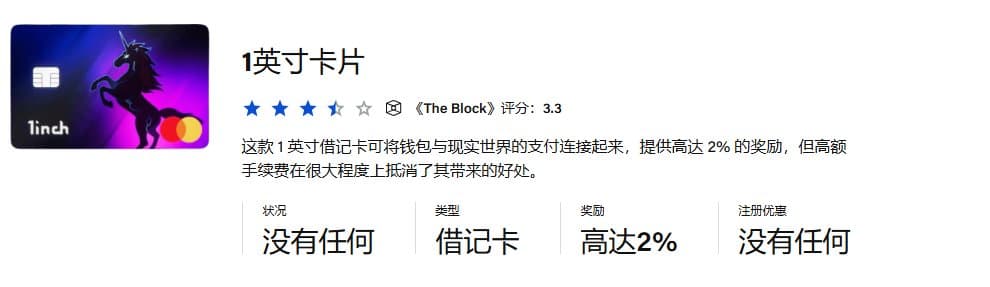
1inch Card (3.3 points)
Analysis: A card launched by the DeFi aggregator 1inch. Although it offers 2% rewards, high various fees essentially offset the reward earnings.
Wirex Multicurrency Card (3.2 points)
Analysis: An established card provider with wide coverage. The downside is that even though it advertises 8% cashback, most users only get around 1%; high cashback requires expensive subscription fees and token holding.
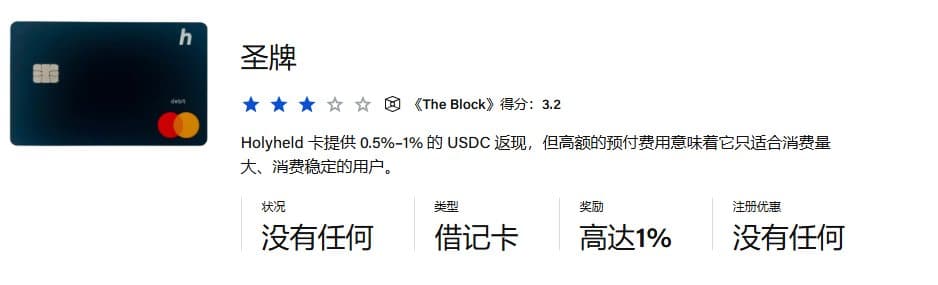
Holyheld Card (3.2 points)
Analysis: Offers 0.5-1% USDC cashback. The downside is high upfront card application/setup fees; unless you spend a lot, it's hard to break even.
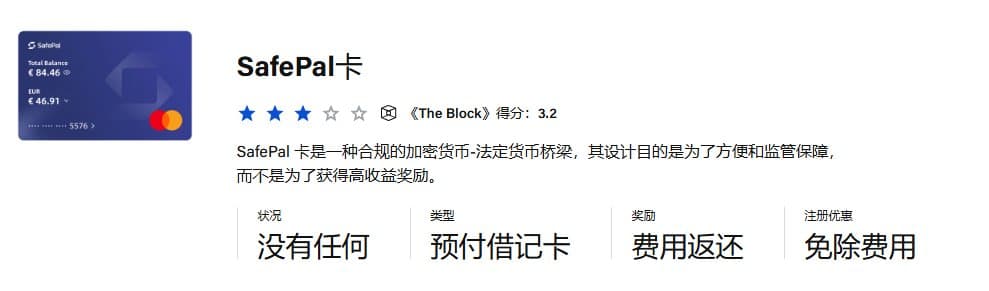
SafePal Card (3.2 points)
Analysis: Focuses on combining compliance with hardware wallets. The downside is that it primarily serves convenience and compliance, with almost no high-yield reward design (main reward is fee rebates).
Avici Card (3.2 points)
Analysis: A simple global payment tool with no crypto rewards, mainly serving Web2 scenarios.
DeCard Luminaries (3.2 points)
Analysis: A premium card targeting C-suite executives and KOLs. The downside is extremely high annual fees and high entry barriers; ordinary people cannot apply and it is not cost-effective.
Nexo Crypto Card (3.1 points)
Analysis: Nexo's card is interesting; the Credit mode offers cashback, while the Debit mode does not. This complexity and the requirement to hold assets as collateral lower its score.
Avalanche Card (3.1 points)
Analysis: The official card of the Avalanche protocol. Supports spending AVAX and stablecoins. The downside is that there is no clear reward plan; it is merely a payment channel.
CoinJar Card (3.1 points)
Analysis: Although it has points (worth about 2%), the card itself has a 1% transaction fee. After fees, users earn almost nothing and may even lose money.
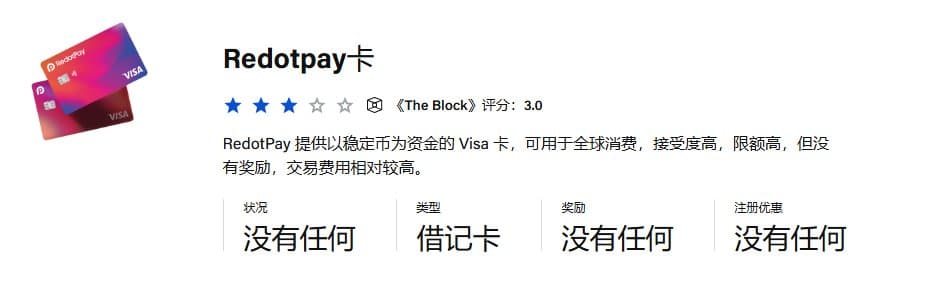
RedotPay Card (3.0 points - lowest but popular)
Score: 3.0
Type: Debit Card
Core Pain Points: No rewards + High fees
In-depth Analysis: RedotPay is very popular in Chinese-speaking regions because the application threshold is extremely low and it supports USDT top-ups. Why is it the lowest rated?
Zero Rewards: No token cashback on spending.
Fees: There are transaction fees (about 1%) and top-up/exchange losses. In The Block's rating logic, it is merely a tool for "consuming assets" with no wealth-building attributes. Although usable, from an investment return perspective, it is one of the least cost-effective options.
Summary: How to Choose Your 2026 U-Card?
After reviewing these 31 cards, we can draw the following conclusions:
If you want true passive income: Choose EtherFi, Gnosis Pay, or UR CARD. They not only let you spend but also allow you to safely earn 3-4% returns through on-chain mechanisms without worrying about centralized platform collapses.
If you are in the US or pursue extreme compliance: The Gemini Credit Card is the best choice; swipe mindlessly and earn crypto instantly.
If you want payment discounts: The Ready Meta Card, even if nerfed, is still the top choice.
If you are a believer in a specific token: Hold CRO and choose Crypto-com (Credit version); hold XRP and choose Uphold.
Regarding low-scoring cards like RedotPay / Bitget Wallet: Although they score low, if you don't care about cashback and only want a simple, no-staking, partially no-KYC, or low-threshold fiat off-ramp channel, they are still usable tools. But remember, you are paying for convenience, not earning money.
Risk Warning: Crypto cards involve asset price volatility and regulatory risks. Please choose based on your own risk tolerance.