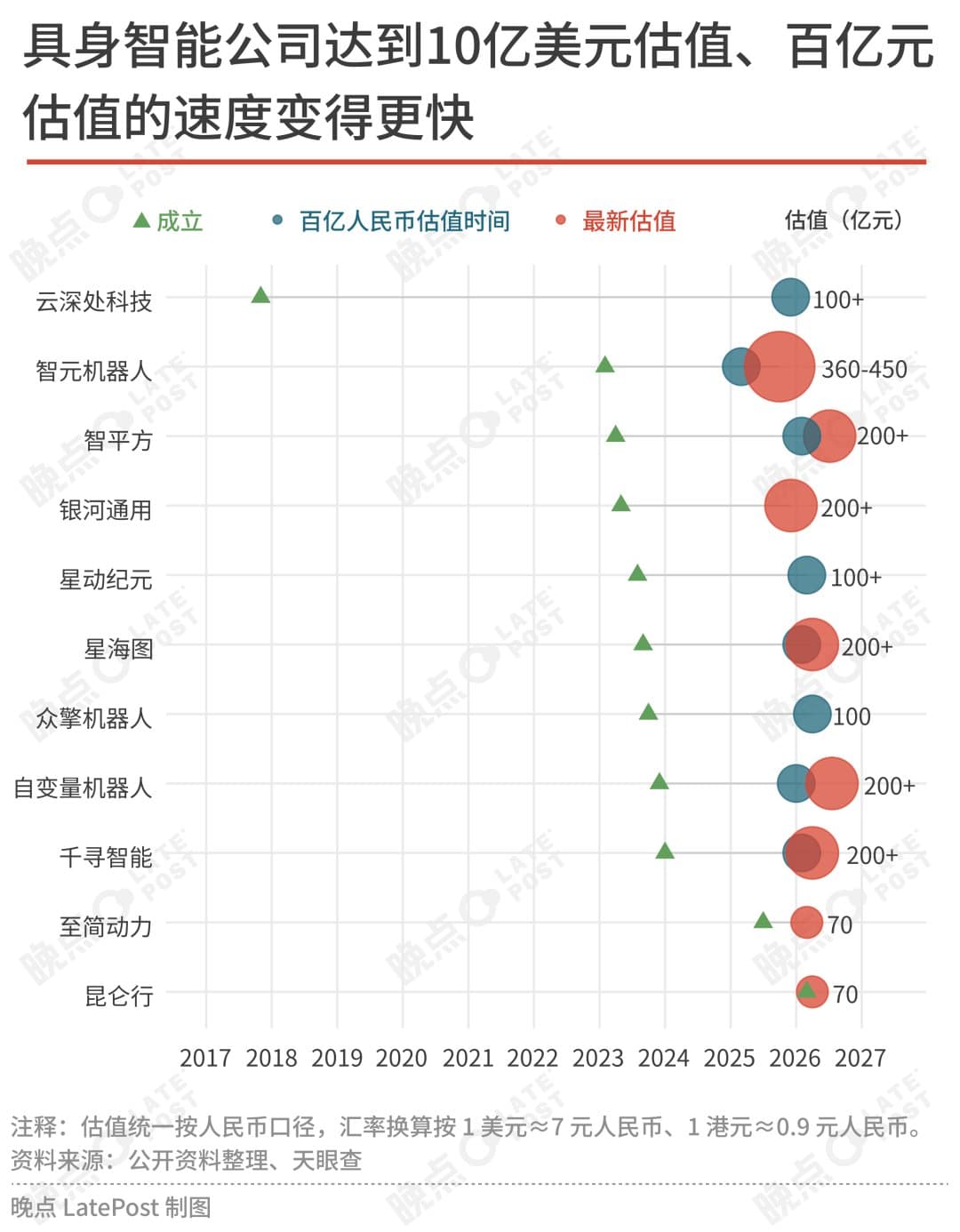
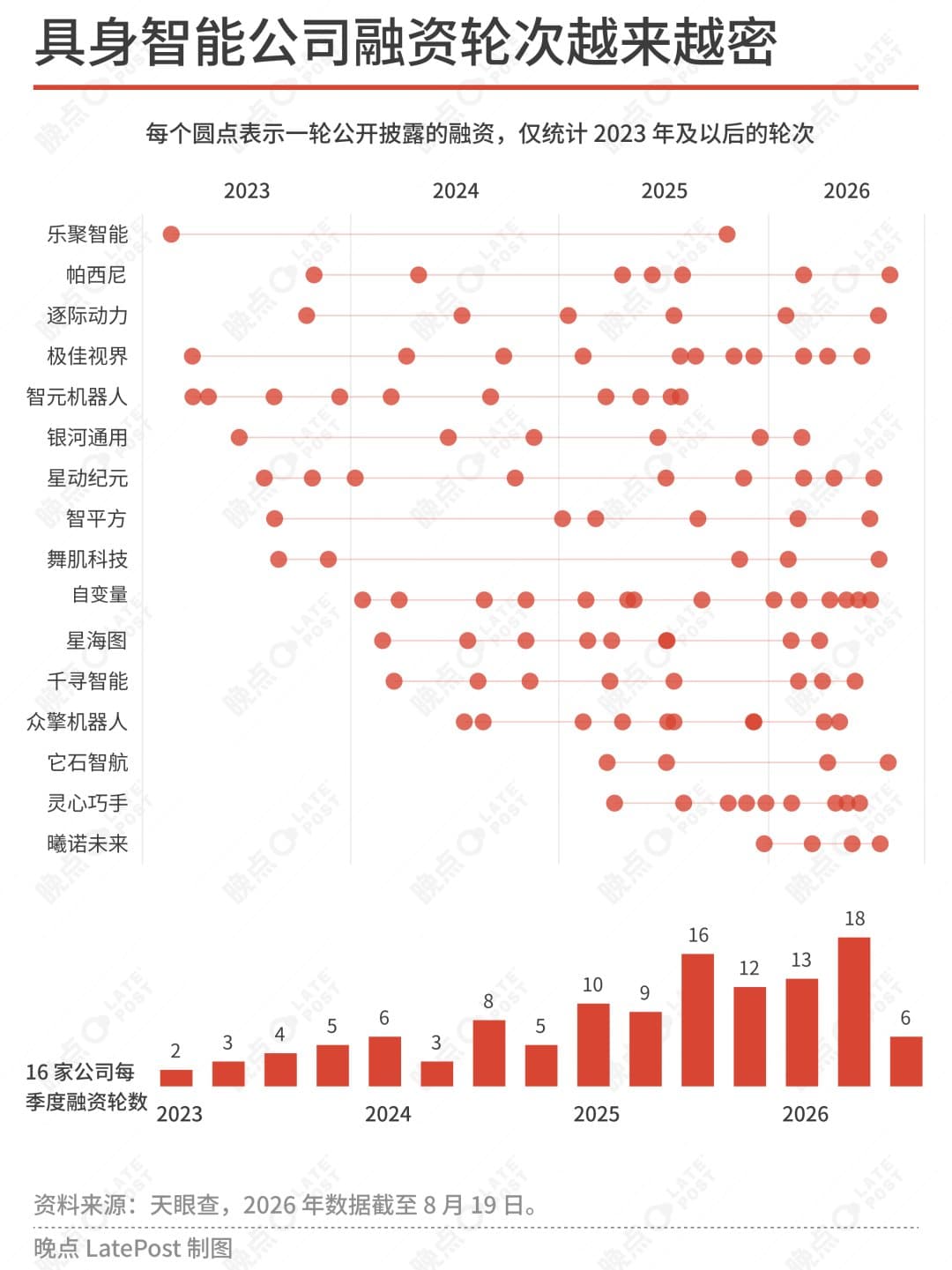
The most striking contrast in the embodied AI industry is that while robots' actual capabilities are not yet ready for factory deployment, the companies behind them have already entered the ten-billion-yuan valuation club: bearing sorting that takes a human 2 seconds takes a robot 70 seconds—even if it were ten times faster, it still couldn't enter factories; a robot takes 90 seconds to move a box, achieving only 30% of human efficiency, yet among the companies that make them, one is valued at nearly 40 billion RMB, and another, founded less than a year ago with five consecutive funding rounds, is valued at over $1 billion.
Robots are also far from being cheaper than humans. A full-sized general-purpose humanoid robot sells for about 200,000 RMB—equivalent to 40 months' salary of a BYD worker—yet its depreciation period is less than 10 months; a pair of high-degree-of-freedom dexterous hands costs over 150,000 RMB and requires maintenance after working 8 hours a day for just 10 days, while Chinese factories can still hire workers for a monthly salary of 5,000 RMB. Yet, the valuations of leading dexterous hand companies have already surged to 20 billion RMB.
According to a Morgan Stanley research report, more than 10,000 embodied robots were actually shipped in China last year, with Unitree selling 5,215 units. Following its listing on August 19, Unitree's market capitalization briefly surpassed 400 billion RMB. At present, the combined market capitalization of four emerging EV makers—Li Auto, NIO, XPeng, and Leapmotor—is only 300 billion RMB, despite them selling 1.75 million cars last year.
In the first half of 2026, domestic financing for embodied AI exceeded 90 billion RMB, with as many as 22 enterprises valued at over 10 billion RMB. Capital flowed from robot bodies to dexterous hands, data, joint modules, and tactile sensors. Some companies reached valuations exceeding 20 billion RMB in less than three years since founding, and there were even cases where a company had not yet been formally registered before finalizing terms for its second funding round.
20 billion RMB is becoming the new threshold for top embodied AI companies. In July, as financing for robot body manufacturers slowed down, the valuation boom shifted toward dexterous hands and data. The three dexterous hand companies we tracked have all surpassed valuations of 20 billion RMB; one was founded just over a year ago, while the other two were valued at under 1 billion RMB early last year—a 20-fold increase in 20 months.
This round of valuation surges lacks any verifiable calculation methodology. In June, an embodied AI investor decided to resign. He described the market: "In an industry still in its infancy, if many people claim that a company can't raise enough money or reach a certain valuation, it loses its seat at the table. It doesn't sound like entrepreneurship; it sounds like playing Texas Hold'em."
Some embodied AI company executives privately share fundraising tricks over dinner: when ten investors add you, leave them waiting for a few days before accepting, then pick just one or two to meet with, and don't tell them who is on the team to build an aura of mystery. The harder you are to reach, the more they want to meet; the more mysterious, the better.
Embodied AI startups have also developed a standard template: a seasoned serial entrepreneur with cross-domain experience acts as the mastermind behind the scenes, paired with a returnee PhD who studied abroad under a luminary in computer science or AI serving as the front-facing CEO. Building on their academic pedigree, they present a logically viable framework, craft a unique technological narrative, and continually reinforce the company's tech-forward image.
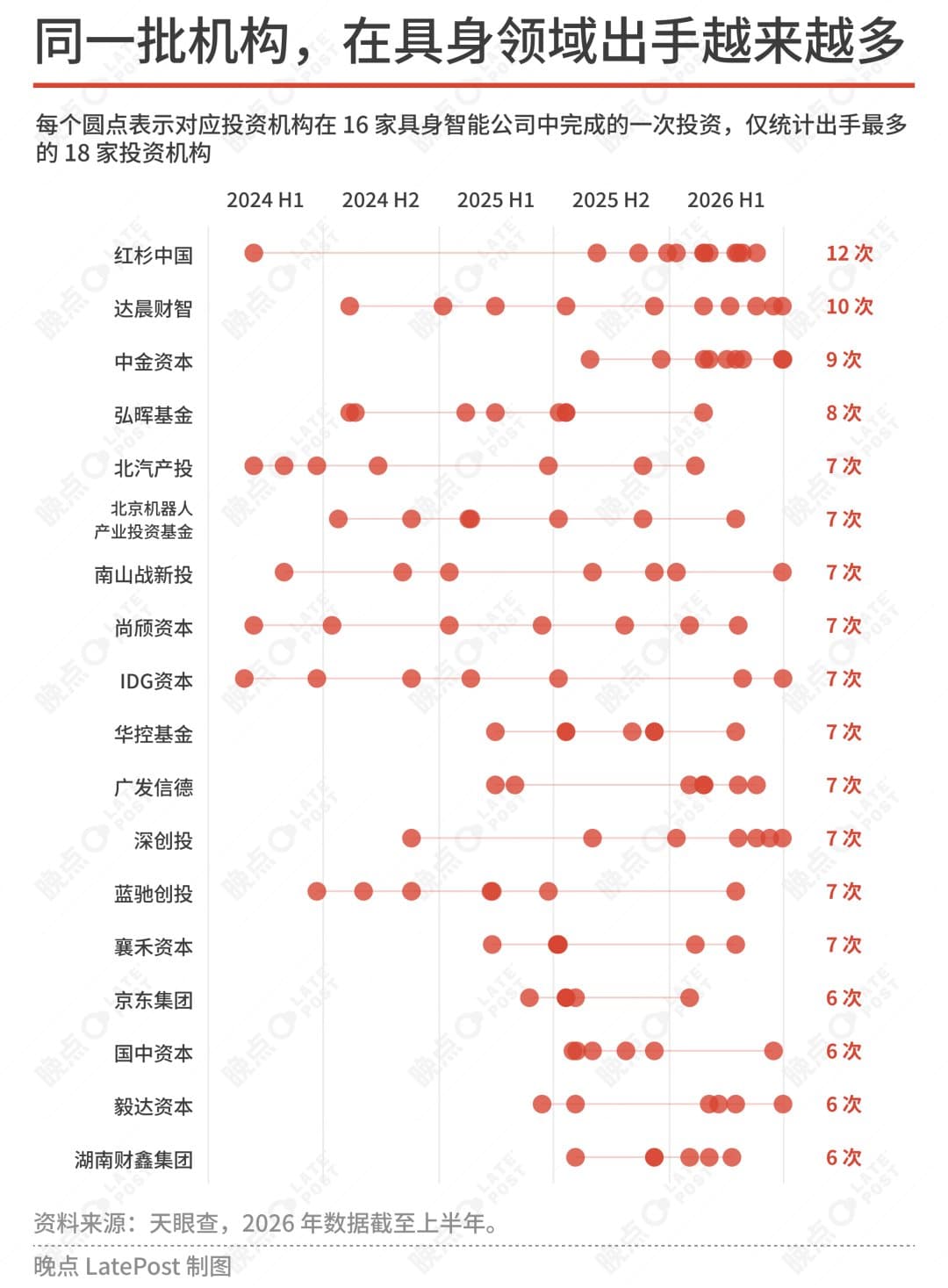
One way to inflate valuations is committing to lead the next round while investing in the current one, causing the valuation to double within a few months. This has even led to scenarios of "different prices for the same round." "Insiders make money from outsiders." The investment institutions themselves have become part of the valuation. Funds that once competed against each other, such as Sequoia and Hillhouse, now frequently appear together in the same club deal. As one investor explained, "Why resist when we can make money together?"
Robots are being sold, but genuine and sustainable demand remains scarce. Unitree generated 1.699 billion RMB in revenue in 2025, selling 5,215 humanoid robots. Over 70% of the revenue came from scientific research and education, with less than 10% from industrial applications. Revenue clearly attributable to manufacturing, inspection, and logistics was merely 15.7 million RMB, and no industrial client has yet made large-scale purchases.
Data collection facilities across the country have become the new major buyers: these data collection plants purchase robots and have operators wear equipment to control the robots in folding quilts, wiping tables, sorting items, and other tasks, then sell the visual footage and trajectory data back to robot companies. Some companies even promise to refund the robot purchase costs to the data plants by buying back their data, thereby cycling revenue and demand entirely within the ecosystem.
A data collection entrepreneur revealed to us that real-robot data currently sells for over 700 RMB per hour. A data collection facility with 100 robots can generate approximately 10,000 hours of data per month, theoretically recouping equipment costs in 8 months. In reality, many robots sit idle for long periods because no buyers can be found for the data. One facility that purchased about 80 million RMB worth of robots ended up reselling some of them to schools because the payback period fell far short of expectations.
Supply chain companies also benefit from this cycle. They take equity stakes, send sample parts, and purchase robots, actively participating in this new trillion-yuan industry. The robotics business has become their new rationale for pitching future growth to investors. A lithium battery materials company saw its stock price rise by 20% after announcing a robotics partnership, while Joyson Electronics saw a 95% stock price surge within a month after partnering with AgiBot and hosting a component launch event. Robots serve not only as products, but also as valuation narratives.
AgiBot has turned this ecosystem into a tiered distribution system: partners first buy robots and then search for clients and application scenarios, with annual sales thresholds ranging from 2 million RMB to 20 million RMB. In 2025, partners contributed 25% of AgiBot's sales, with plans to increase this to at least 60% in 2026. However, determining whether this revenue is sustainable still hinges on how many robots are ultimately sold to customers without equity or supply chain ties, who bears the inventory risk, whether the systems are truly accepted, and whether there are repeat purchases. This depends solely on the robots' genuine capabilities.
Massive capital investment has not translated into significant technological advantages either. A company valued at over 20 billion RMB demonstrated a robot folding a towel, which remained unfinished after 15 minutes; for box moving, specially customized boxes with fixed slots on the bottom were required, and shifting the box slightly caused the robot to fail. Over the past year, while the physical bodies and cerebellar motion control algorithms of top robotics companies have visibly matured, the development of the robotic "brain" remains in a very nascent stage, with generalization capability, stability, and high intervention frequencies remaining unresolved.
What is even more absurd is the severe disconnect between valuations and R&D spending. UBTECH and AgiBot spend about 500 million RMB annually on R&D, while Unitree spends 145 million RMB. In contrast, a company that surpassed a 20 billion RMB valuation in the first half of the year and raised approximately 5 billion RMB in total had an annual R&D expenditure of less than 40 million RMB. Unitree, Songyan Dynamics, Magiclab, and Galbot each spent nearly 100 million RMB to appear on the Spring Festival Gala—an amount higher than the entire annual R&D budget of many companies. Capital keeps pouring in, but because technological roadmaps have yet to converge, the funds merely sit on balance sheets for now.
Computing power and data will become the primary investment focus for the next phase. However, among startups, only eight possess compute reserves of over a thousand GPUs, and the company with the highest data output in the industry has accumulated only tens of thousands of hours, with the single largest procurement order amounting to just a few million RMB. Whether first-person data can replace real-robot data, and whether VLA (Vision-Language-Action) or World Models are more effective—while technical buzzwords converge, the roadmaps themselves have not. The robotics industry even lacks a unified evaluation system and recognized milestones, making technological hypotheses difficult to falsify in the short term.
The embodied AI frenzy was initially sparked by Tesla's Optimus project. Elon Musk projected that the long-term global inventory of humanoid robots could reach 10 billion units, transforming human socioeconomic structures. The market simplified this to: the price of a car, with the market volume of a smartphone. At the peak of market enthusiasm, hundreds of supply chain companies continuously submitted samples to Tesla, and consulting fees to connect with Optimus engineers once reached 9,600 RMB per hour. However, with mass production repeatedly delayed, some suppliers now admit that the past three years were virtually in vain, and the valuations attributed to their robotics businesses have completely vanished.
Unitree's public listing provided a new price anchor for the industry, but it differs from most embodied AI startups: it does not rely on fundraising to survive, having already proven its ability to mass-produce robots, generate real revenue, and maintain strong gross margins. Multiple robotics founders and investors believe that Unitree's true core competitiveness at present lies in PCB routing design, motor parameter tuning, and supply chain management. Judging from its current revenue and product capabilities, Unitree resembles an intelligent hardware company with robust engineering and manufacturing strengths, though whether it can further evolve into an embodied AI foundation model company remains to be seen.
If the secondary market is willing to pay a hefty premium for Unitree's yet-unproven "brain" capabilities, embodied AI startups in the primary market will continue to enjoy valuation headroom. But if the market values Unitree strictly based on the revenue and profits of a hardware company, many startups that still lack revenue, profits, and mass production capabilities will find it difficult to justify why they are worth so much money.
An embodied AI investor summarized his psychological shift over the past few years with a catchy refrain: Question the bubble, understand the bubble, embrace the bubble, enjoy the bubble. But he didn't mention what the fifth step is.