The first step of courage is to face this world of exploding complexity and walk into it without knowing the immensity of heaven and earth | Chongqing, the 1142nd speaker at Yixi

Is a person's concern for the world a means or an end? Do we care about and invest in something, collect information about it, savor it, and understand it because it gives us emotional value, or because it can form a symbol of our identity, or because it can help me gain more attention and affection from others? I don't think so.
Through Hole After Hole
2026.06.06 Shanghai
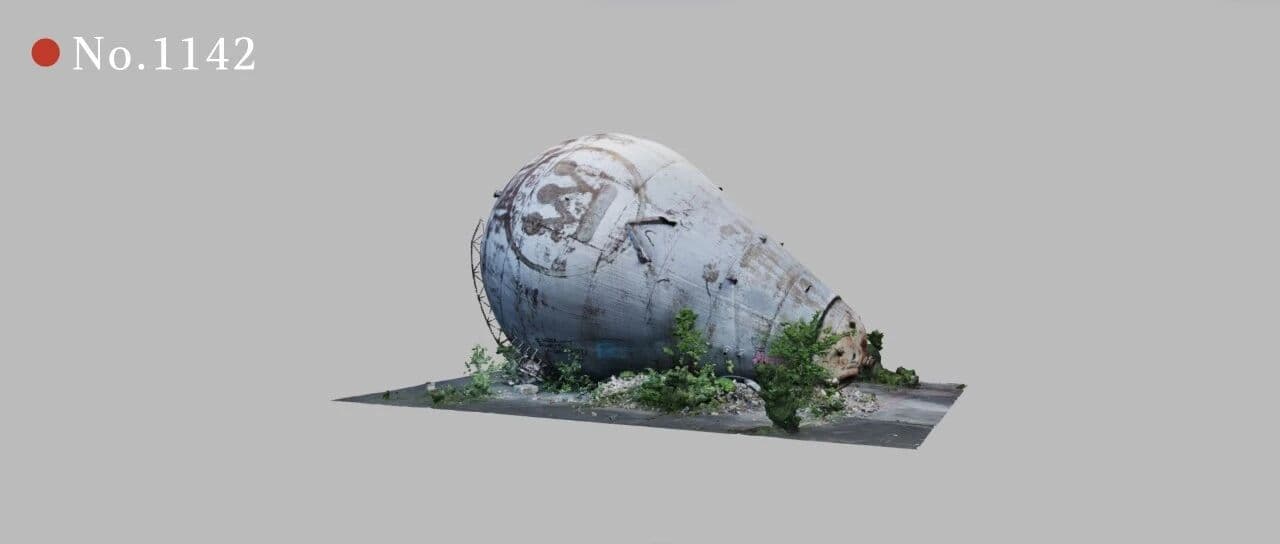
Hello everyone, I am Zhongqing, a podcast content creator. But today I want to start my speech with this big light bulb on the screen.
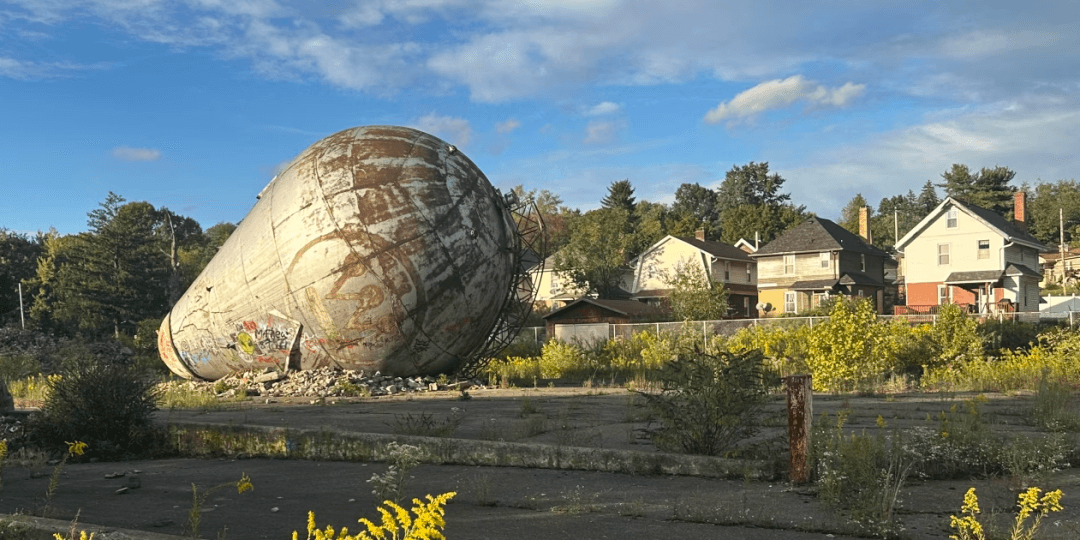
In a wasteland in the eastern suburbs of Pittsburgh, Pennsylvania, USA, there is a strange object shaped like a light bulb. In the summer of 2024, my friends and I walked through piles of trash and feces to reach it, and by then it was dusk.
In 1937, before the atomic bomb was born, Westinghouse Electric, which was competing with General Electric at the time, tried to invent a new energy source—nuclear power. This place was once the laboratory of Westinghouse Electric, and this thing is called the Westinghouse Atom Smasher. It was the core facility of the laboratory, installed vertically back then, five stories high.
Before becoming a relic, it was a 5-million-volt particle accelerator, somewhat similar in principle to the Van de Graaff generator we played with as kids—you touch a metal ball and your hair stands up. It was built this large precisely to achieve 5 million volts of high voltage, allowing particles to accelerate in a vacuum tube and collide with target particles.
I think this is a very interesting pattern in the history of science: to understand things that are extremely small in scale, humans have to build things of enormous scale. Researchers used this big machine for various precision measurements and studies, leading to the first realization of uranium photofission in 1940.
World War II changed the trajectory of many things, from scientific research to industry—everything had to prioritize the war effort. So the focus of the Westinghouse Electric Research Institute shifted to microwave radar. The nuclear physics researchers were reassigned, and later the entire institute moved away, leaving only this big light bulb. Today, even residents of the nearby town know very little about it; this light bulb has become a hidden destination that ruin enthusiasts love to talk about.
▲ Source: WSJ
The interesting thing about ruins is that they are uncooperative with historical narratives. On one hand, this object is a milestone in science because it was the carrier of the first large-scale nuclear physics research program in human history; on the other hand, it is also a witness to the decline of American industrialization.
In 2015, the support structure of the atom smasher had deteriorated from years of neglect, and the real estate company that bought the land had no money to dismantle it. For safety reasons, they could only lay it down on the spot, so it couldn't even disappear properly—it just had to stay there. Today, it is a huge, useless piece of sheet metal. It hasn't been covered in graffiti simply because it's too smooth; graffiti enthusiasts can't climb up, so graffiti only appears at the bottom.
When I looked at it, I felt an inexplicable sadness. It is clearly a man-made object full of power, but it is stuck in the cracks of history: it's not old enough to enter a museum, but it's not new enough to provide any practical value.
Before dark, a few of us quickly used cameras and drones to capture it, and that's how the model you see today came to be.
Models like this—we have scanned thousands of them so far, covering 17 countries and regions. We put them on a website for everyone to view and download.
Making content is about dealing with the dissonance between the inner self and the world
Over the past ten years, most people have come into contact with me not because of the models, but because of the topics and stories I tell, like the one just now.
I produce a specific type of podcast. In form, it's still conversation, but what we talk about is something I have carefully considered—long-form, thematic narration and discussion. My topics rarely involve popular public issues that everyone is concerned about; instead, they are random, attention-grabbing little things, especially those that feel unfamiliar or strange to me.
For example, a few years ago, when the Hollywood Writers Guild went on strike, I studied how strikes are organized. At first, my motivation for researching was only one thing: I didn't understand why the late-night shows I liked to watch also stopped airing when the writers went on strike. But later I realized that behind late-night shows is a group of writers who write scripts during the day and air them at night.
So I started reading the negotiation agreements, the statements from both sides, and organized the daily news from those months into a table... I gradually discovered that the core agreement in the labor-management negotiations was called the Minimum Basic Agreement. It was far more than just a contract; it was a layered sedimentary landscape.
Seventy or eighty years ago, the writers of the previous generation and the studios of the previous generation fought for credit and minimum compensation. Fifty or sixty years ago, the former fought the latter for compensation when shows were rerun on TV, as well as for pension and health insurance contributions. Thirty or forty years ago, writers demanded a share of revenue from video tape sales.
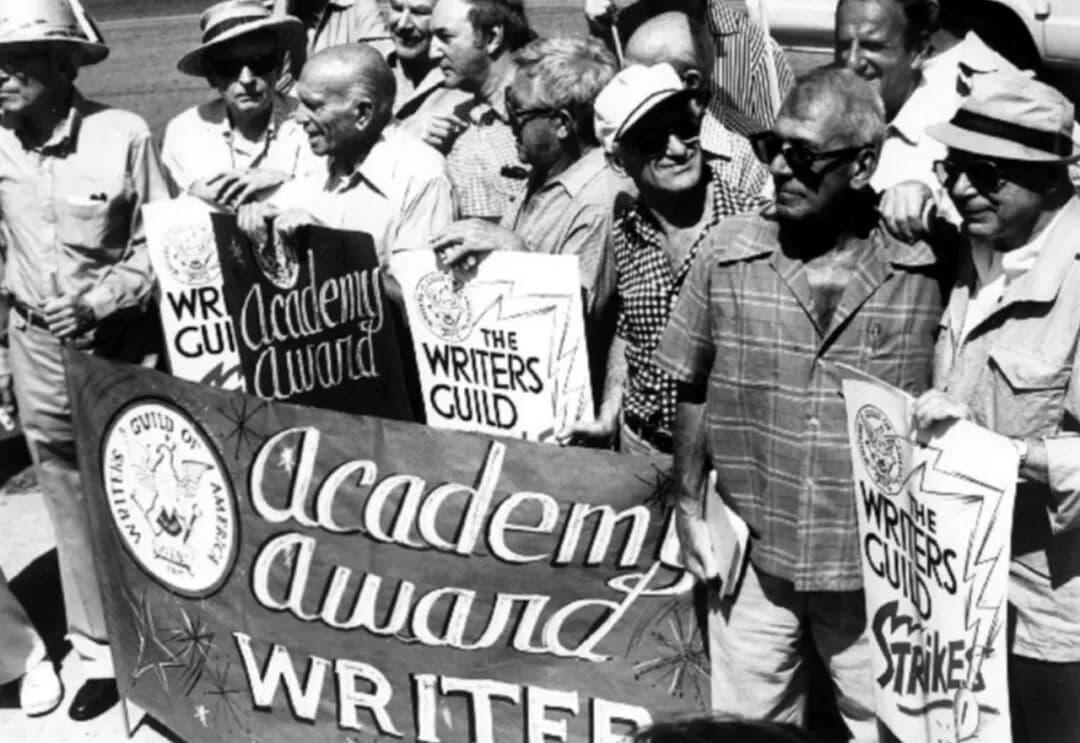
▲ During the 1981 Hollywood writers' strike, Oscar winners participated in protests (Source: Writers Guild of America West)
Today, the benefits and protections that a member of the American Writers Guild relies on for survival are a systemic legacy accumulated by countless predecessors, as a collective, through repeated negotiations and strikes. So this agreement is not just an agreement; it is a history that has been passed down through generations and continues to grow toward the future.
The podcast episode I eventually produced was a running account of the materials I dug up. This is one of my deep insights from ten years of making analytical programs: as long as you immerse yourself in the ocean of materials and engage in close combat with the details, you don't need any earth-shattering, brilliant conclusions.
The key to making content is to deal with the dissonance between your inner self and the world, and to sort it out. The process of sorting it out, as long as you narrate it straightforwardly, already makes for good content.
Another example: five or six years ago, in my own music podcast "Bu Zai Chang" (Absent), I talked about the revival of a song. It was an old Japanese song from the 1980s, long forgotten, but suddenly revived in 2020, with hundreds of millions of views on YouTube.
The song is called "Plastic Love." It didn't rely on any trending events or any obvious reason; purely through repeated listening by the audience, it conquered the algorithm and swept through various subcultures including vaporwave.

▲ Single cover of "Plastic Love" when it was re-released in 2021
At first, I just noticed that the song had an abnormally high number of plays, so I investigated its singer, Mariya Takeuchi, and the arranger, Tatsuro Yamashita, the release date, and the lyrics. In my workstation, I replicated its rhythm, harmony, and melody note by note. In those old, tedious, but extraordinarily rich layers of sound, I heard connections I hadn't imagined: the musical language of Mariya Takeuchi and Tatsuro Yamashita had an inheritance and internalization relationship with the distant other side of the Pacific.
And this song is also related to the social mood of Japan's bubble economy period. After the economic stagnation and recession, the material prosperity and decadence that filled the cities became a distant dream. So what was once vulgar and extravagant became today's dreamlike nostalgia. By 2020, this nostalgia had even become a new aesthetic.
The beginning of my personal research and exploration is always these inexplicable little things, far away from me, but they are like holes. If you are willing to go through them, you will fall into another vast world. Such unexpected, suddenly unfolding journeys always make me linger and forget to return. By the time I come back to my senses, I have already gone through and traveled a long way.
The first step of courage is to face endless information
I also did a topic on antitrust. In 2023, Microsoft acquired Activision Blizzard, a game company. The U.S. Federal Trade Commission launched a long antitrust investigation into this. Logically, I had no qualification to discuss this issue, but I always felt something was strange about it. On one hand, from a legal definition, this case did not constitute a monopoly by any measure, because the video game industry is too large; no matter which dimension you look at, it didn't reach the threshold of monopoly.
On the other hand, like everyone else, I could clearly feel that there was something harmful to the public interest in this matter, but it wasn't a monopoly—so what was it?

▲ Activision Blizzard's representative works include many famous games such as "Call of Duty," "World of Warcraft," and "StarCraft." The picture shows its company headquarters in Santa Monica, California, USA (Source: Mario Tama-Getty Images)
To this end, I read through more than 300 court documents and followed the entire hearing process, including reporters' live transcripts. In between the lines, I saw a deep conflict. On one side was the classical economic view that as long as the market itself is maintained and sufficient competition is ensured, the overall welfare of producers and consumers will be maximized. On the other side was reality: today's giant platform companies are always desperately scrambling for the next trend, wave, or paradigm.
During paradigm shifts, they invest heavily, and then suddenly contract when they find it's a bubble. This repeated blind action of moving mountains and creating seas drags the entire society, the industrial chain, every small company, and individual workers into the water. The latter is not within the scope of classical economics, so the former cannot explain the nature of the latter, and naturally cannot deal with the consequences.
This is actually a very abstract academic topic at the intersection of law and economics. As an ordinary person with no academic background, I just accidentally plunged into a vast sea of materials. When I came out, what remained in my heart was a long, winding journey. It had connected many things—related to my own daily life experience, to the country and market we live in, and to some distant abstract logic and economic theories.
For me, the greatest calling of making content is this kind of broad connection. Therefore, I will maintain an anti-professional, anti-authority stance for life. People can understand and comprehend far more than they think. Courage seems abstract in modern life. But for me, the first step of courage is to face endless information, to face this world of exploding complexity, and to walk into it with interest, not knowing the immensity of heaven and earth.
"The Map Replaces the Ground"
Last year, I finished another series called "Archetypes." There are many recurring patterns in popular culture. Once you notice them, you keep recognizing them. For example, the "Noble Savage," like the Na'vi in "Avatar." In modern life, we always yearn for pastoral, idyllic aesthetic objects that are not polluted by industrial civilization and possess natural noble virtues. We romanticize people from afar—like children in the mountains, indigenous people who don't speak mainstream languages, self-sufficient tribal members. We think they are more noble, closer to truth, goodness, and beauty.
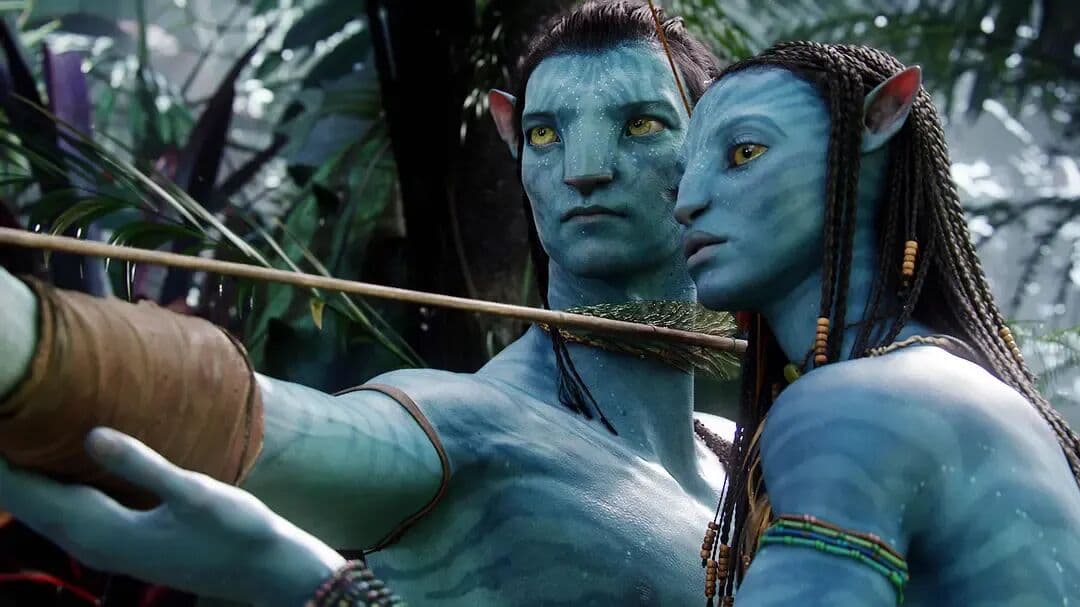
▲ Source: Movie "Avatar"
Another topic is called "Hive Mind," referring to a form of advanced intelligence completely different from today's human society. For example, worker bees around the hive, ant colony activities, and birds flying in various formations. In the world of insects and animals, we can observe the emergence of this intelligence: individual entities seem to have no intelligence, very primitive, but the group exhibits extremely impressive intelligent phenomena. Science fiction writers and directors project these images onto aliens or various thought experiments to explore whether the hive form is a transcendence—if each of us gives up individual will, eliminates all conflicts and obstacles between individuals, we would no longer have pain, completely merging into a large collective. Is this the next chapter of civilization's evolution?
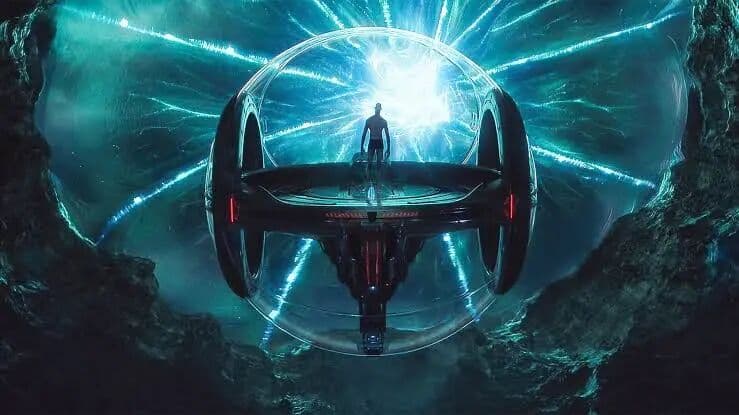
▲ The third season, sixth episode of the TV series "Love, Death & Robots," titled "Swarm," showcases the swarm as a collective intelligence (Source: "Love, Death & Robots")
The final episode of The Prototype is a monologue program called "The Simulation Hypothesis," a thought experiment that has become particularly popular in the last decade. Its meaning is simple: the world we live in is entirely fake, nothing is truly real, everything is a simulation, an ongoing computational process. Just like the NPCs in an open-world video game running on a computer, you and I do not exist.
What truly exists in physical space is a higher-order civilization—in that world, there might be a child doing homework at home, running a world simulator on their computer, simulating 7 billion people. We are like NPCs in a game, unable to perceive the player or to observe the truly existing higher beings and the truth of the world.
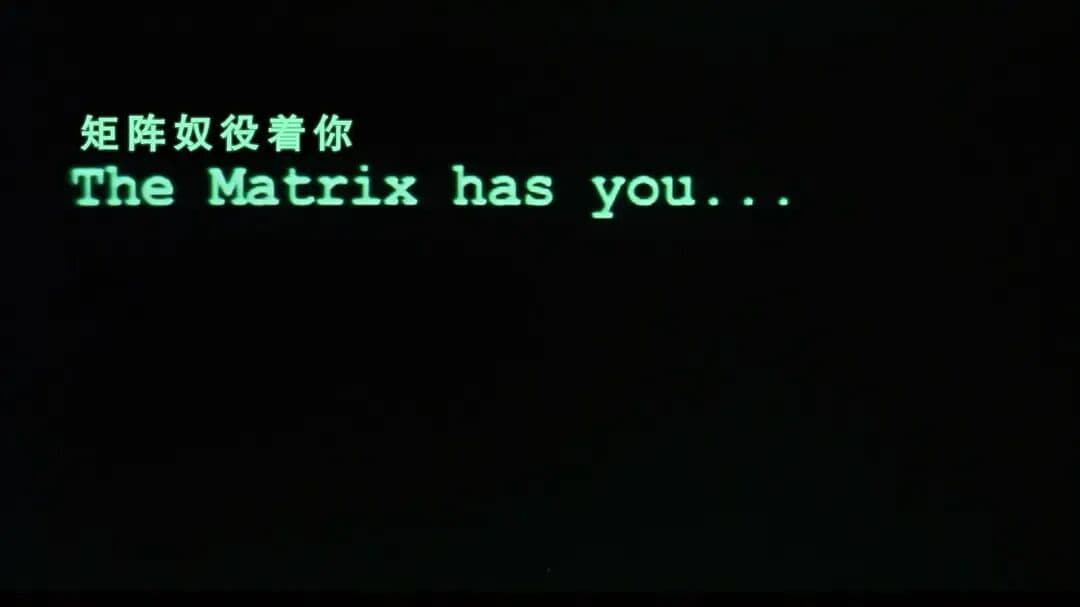
▲ In the movie The Matrix, humanity is trapped in a virtual reality "Matrix" created by intelligent machines (Source: The Matrix)
The Simulation Hypothesis seems like an ancient idea; it reminds you of Zhuangzi dreaming of a butterfly, or Socrates' allegory of the cave. But the more I think about it, the more it feels like a new problem, a new symptom of the contemporary world.
First, it's related to the development of computer technology. People in any era use the most advanced technology of their time as an analogy for themselves, because our greatest desire is to understand ourselves, so we imagine how we are constructed and operate. The ancient Greeks believed the human body contained many channels and waterways, because hydraulic engineering was the cutting-edge technology of that era. People in Newton's time saw themselves as machines, no different from clocks, just with more and smaller gears. Today, we must be running code.
Another field related to the Simulation Hypothesis is evolutionary biology. Animals and insects exhibit many interesting deceptive behaviors that reflect a principle evolutionists call "Fitness beats truth." All our functions, including our senses—eyes, ears, nose, tongue, body—are optimized results of survival of the fittest, products of Darwinian evolution, not a mechanism for seeking truth and knowledge.
What else is the simulation related to? It's also related to our being buried in an information explosion, unable to touch the real world. Postmodern philosophers use this phrase to describe today's life: the map has replaced the terrain. We live on the map today, not on the terrain. We live on top of countless layers of information, within numerous cybernetic socio-economic-political mechanisms that regulate and arrange us. Thus, the world is something we constantly try to understand but can never directly touch.
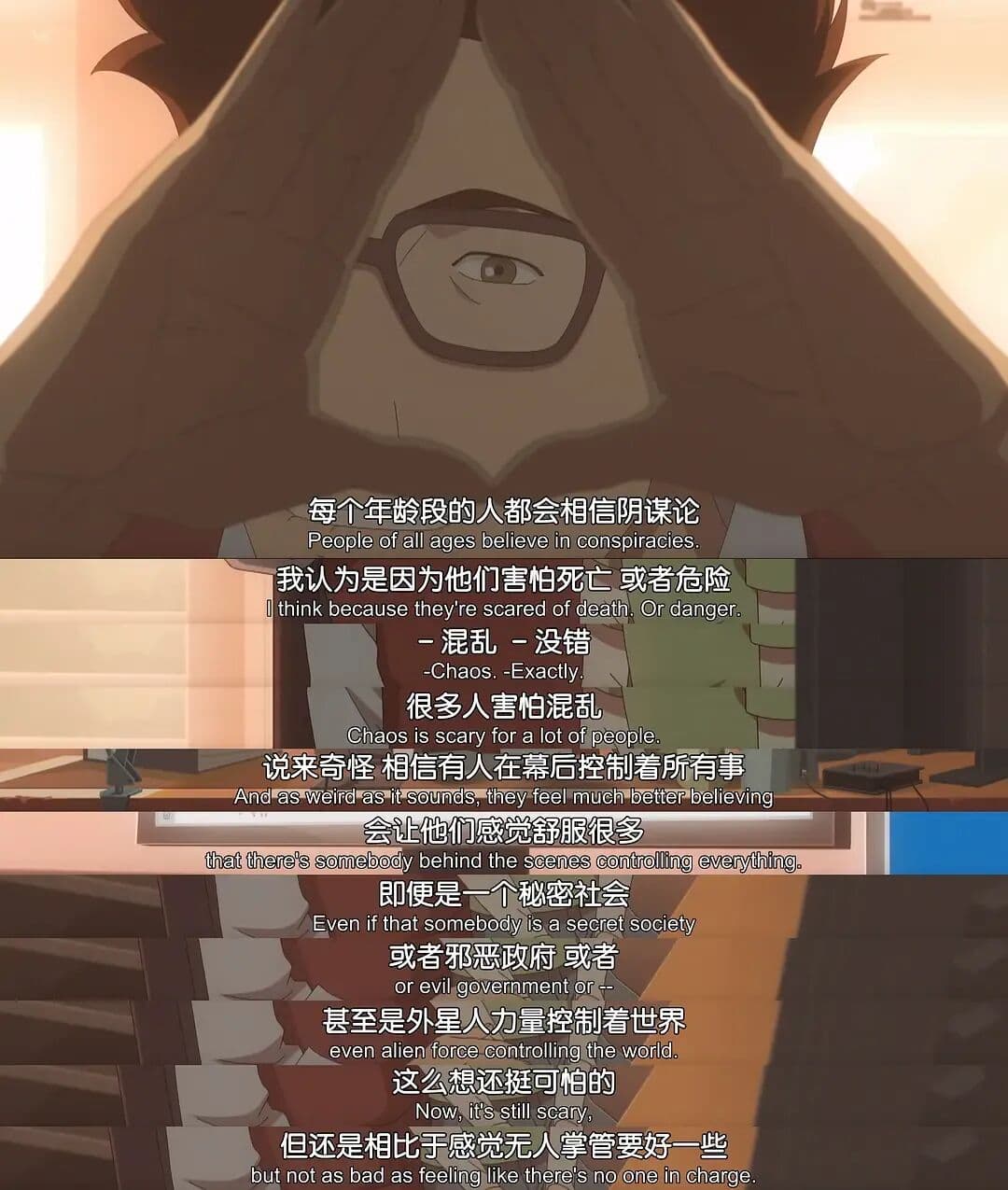
▲ Source: Pantheon Season 1
Fundamentally, we cannot grasp our own situation. We have an illusion that we can do anything; advertisements tell us we can be anyone, but we can do nothing. This era-specific, intrinsic, persistent fatigue and despair cannot be reasoned away, and this is the fertile ground for the Simulation Hypothesis.
The Simulation Hypothesis is a placebo, a red pill. On the surface, it's a challenge, the pursuit of truth, but in reality, it's a form of lying flat and giving up.
The Simulation Hypothesis caught my attention also because I myself have been somewhat seduced by it. I recall when I was in the third grade of elementary school, my father spent a fortune to buy me a personal computer. That was around 1996 or 1997, a 586. I used it to dial up to the internet; loading a single picture took five minutes.
Back then, pirated books, underground magazines, pirated records, and fragments of English web pages I couldn't understand—all kinds of illegal publications—were my spiritual sustenance. Piracy gave our generation the "what," but we had to figure out the "why" ourselves through imagination. The outside world was bizarre and aloof; I could only ponder it myself and delve deeper on my own.
As a child, I pieced together stories from album liner notes; as an adult, I collected information from the internet. I know very well that I have always been a person living inside my own head. I'm reluctant to admit it, but for me, this world exists on paper, on screens, in headphones—it's quite easy for it to be fake. For me, the Simulation Hypothesis is not an unacceptable proposition.
What if we modeled all the Liao Dynasty pagodas?
Fortunately, nearing 40, I encountered a group of friends who were the complete opposite—they were always out and about. It took me a long time to realize that my rummaging and connecting in historical documents and their going out and about were just different forms of the same thing. During the recording of the Prototype series, I joined them. We went to many places and gradually developed an addictive hobby—taking photos of buildings to create 3D models.
In the fall of 2023, we went to Northeast China to see Liao pagodas. There are only about 80 surviving Liao pagodas, all concentrated in the north. Sometimes you can visit several in a day by car. Seeing them consecutively, you quickly notice many formal similarities: all are octagonal, all are of the dense-eave type—with a high base, a tall body, densely packed short eaves, all solid brick-and-stone structures, yet attempting to imitate wooden architectural forms in detail.
At that time, the archaeologist in our circle, Keda, told Han Yang that modeling was actually very simple: just take many photos around the pagoda and then reconstruct a 3D model on the computer. A pagoda is the simplest object for 3D modeling because it's like a stick—entirely convex, with no particularly complex concave structures. I said, if we modeled all 80-plus Liao pagodas, couldn't we rotate and play with them side-by-side on the computer to observe their commonalities and individualities?
Although today, we have expanded this project into a grand undertaking of scanning every building in the world, within our team, we still call it the "Pagoda Project."
The focus of the Pagoda Project is not the modeling technology—that itself is nothing new; nor is the key the models—asset stores have millions of architectural models, all handcrafted by artists in 3D software. What we are purely doing is photographing, documenting, and preserving these flawed, imperfect, dust-covered architectural models. They have one thing that makes them different—they are real.
I am fascinated by ruins because they keep complexity in place
On our modeling trip in the US, we passed through a small town in Pennsylvania. There was a hollowed-out mountain, a calm lake, and next to it an abandoned cement plant named Atlas. A hundred years ago, these cement kilns began mass-producing cement with such advanced technology that the cement was exported globally—today, cement has razor-thin margins and can't even be sold outside a province.
This work attracted many first-generation German immigrants. Unable to find a livelihood back home, they came to the New World to build a new life. Men worked in the plant during the day and learned English at night; women stayed home to raise children and wove cement bags. This cement built the Empire State Building, built the Panama Canal. Decades later, before deindustrialization swept everything away, their children went to college and changed their fates. Today, these early cement kilns barely survive on donations from local nostalgics.
In the American South, near the end of our journey, another marvel deeply shook me—the Mississippi River Basin Model. The name sounds like a desktop teaching aid, but it is actually a massive physical model covering 200 acres, equivalent to over a hundred football fields. It completely copies the Mississippi River—including all its tributaries and waterways spanning nearly half the United States—using cement, pumps, pipes, gates, measuring instruments, and winding channels. Functionally, it is not a model but a computer, a computer made of earth and water.
In US history, floods occurred year after year, and their management and compensation imposed a heavy financial burden on the federal government. So they sought ways to study mitigation strategies. Today, to study where to build dams or how to release floodwaters, we open a computer, write programs, and run simulations, but that era had no computers. So the engineers of the time adopted a classic yet incredibly crazy idea: copy the river course, build a miniature model, and pour water directly to observe the results.
Thus, from 1943 to 1966, they spent over twenty years building this model. Ironically, by the time it neared completion, its era was almost over—computers were already beginning to have modeling capabilities. This massive ground computer became obsolete just as it was finished. However, in the 1950s and 1960s, it played a significant role, simulating numerous floods and saving countless families, villages, and lives.
Today, it nominally resides in a park, but when we entered, the situation was dire: trees grew out of the riverbed, grass covered the channels, the slabs had cracked, and incredibly, someone had even driven a car into it to practice driving.
In America's short history, such ambitious attempts abound. They directly or indirectly shaped and drove the progress of technology and industry, and to a large extent, shaped modern life across the entire planet today. Yet in the US, the visibility of such things is far lower than what I believe they deserve. Most historical buildings and landmarks, along with the narratives repeatedly told to tourists by scholars and guides, represent another story.
"America is a nation of immigrants" is a classic saying, but if you travel along America's National Road, you'll understand its meaning more concretely. National Road, the first highway entirely funded by the federal government in the US, acts like a needle, piercing from the East Coast into the interior.
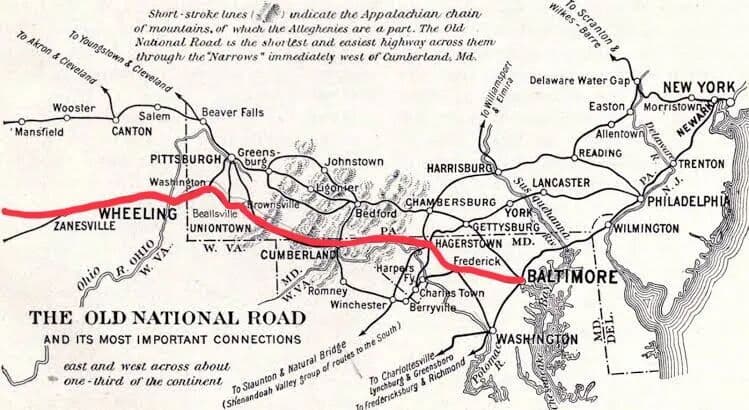
▲ 1916 map of the eastern section of the US National Road (Source: Britannica)
Imagine the countless things along this road that constitute the nation's narrative—places where Washington lived, battles he fought, roads he built, even several tollhouses that are well-preserved. One is called Searights Tollhouse, a very small house built in 1835, where the toll collector's family lived on the second floor while he collected tolls downstairs every day.
The stories of different ethnic groups settling and pioneering along the way form a continuous tapestry: German immigrants gathered here, Irish immigrants clashed with others, some were driven into valleys, others stayed to farm, some established churches for missionary work. It is among these houses, mills, cemeteries, and schools that America took shape. These buildings easily form a story a nation wants to tell itself: we are a group of immigrants from afar, building roads and churches, conquering and conflicting, then reconciling and merging, ultimately becoming one people.
However, milestones of technology and industry rarely receive such treatment, because they are difficult to moralize, hard to narrate as tales of conquest and heroism, even though those cement plants, hydraulic projects, and research facilities—unprotected and unwitnessed—truly built the modern world.
I believe behind this contrast lies a fundamental choice in a nation's narrative: it prefers to commemorate its legitimacy rather than its modernity. Perhaps for them, who America is and how we became a nation always outweighs "how our present-day lives were created."
The reason I am fascinated by these ruins is precisely that they cannot be integrated into a single, neat, clean narrative; instead, they keep complexity entirely in place.
In Serbia and Bosnia, this complexity sometimes transcends the great tragedy of a nation's disappearance, rising to a level of comedy. The concrete monuments of the former Yugoslavia represent a historical peak of Brutalist architectural aesthetics. These huge, silent objects were Tito's regime's long and futile attempt to bridge ethnic conflicts and build national cohesion. But in Sarajevo, there is one exception that is neither solemn nor dignified.
It is a canned beef product placed on a white stone pedestal, like a supermarket item rendered outdoors due to a system glitch. An inscription on the base reads: "To the international community, from grateful citizens of Sarajevo."
From 1992 to 1996, Sarajevo endured a long siege. The Serbian forces' guns were on the hills outside the city; inside, water and electricity were cut off, and people queued for aid. During this time, the UN and the international community air-dropped vast amounts of humanitarian aid. This particular canned beef became a symbol, long remembered by locals. Its quality was abysmal, it tasted terrible, was long expired, and most horrifically, some cans dated back to the Vietnam War. Today, this can is filled entirely with the irony and hatred of Sarajevans—what we needed were weapons, a ceasefire, mediation, and a way out, but what you sent were expired cans.
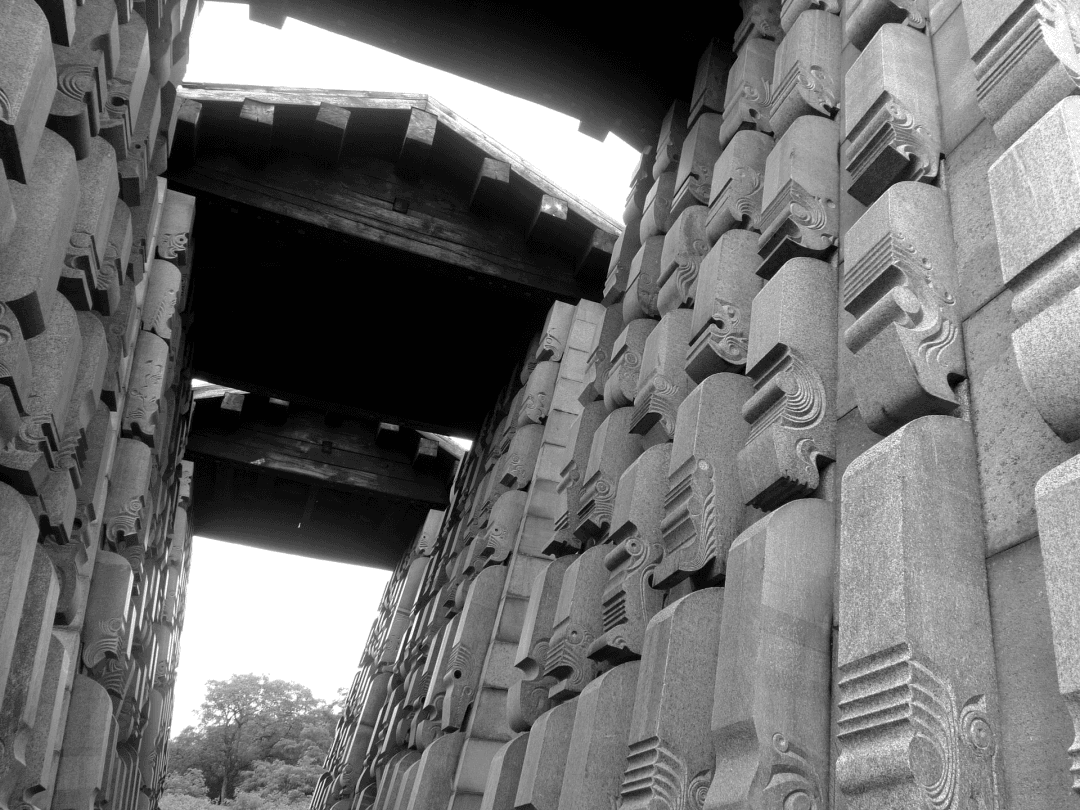
On a hillside in Čačak, Serbia, we drove down a muddy path and saw a monument called "Struggle and Victory." Unlike other monuments, it is a giant arch, commemorating over 4,000 fighters and civilians killed by fascists between 1941 and 1945, and housing the remains of several hundred partisans.
When you walk in, you feel a chill. The inner and outer surfaces of the stone are carved with animals and spirits from folklore and mythology around the world. This work once sparked protests because it bypassed the political narrative of the red star, hammer, and sickle, introducing ancient symbols. Walking through the passage, you can sense that the designer is conducting a requiem for the deceased—entering from one side, the soul passes through alternating darkness and light, and then you walk forward, forward, toward the afterlife and freedom.
Building a Museum That Will Never Be Completed
Our team continues to move forward. We have traveled through more than a dozen countries, passing by too many strange things: abandoned prisons, palaces of cults, tuberculosis hospitals where patients were locked in to care for each other and left to fend for themselves; teapots, teacups, and coffee pots soliciting business along highways, golf-ball-shaped buildings; and a vintage car mischievously fixed to a pillar, with a Santa Claus in the driver's seat. Drill into these holes, and without exception, there is a whole world.
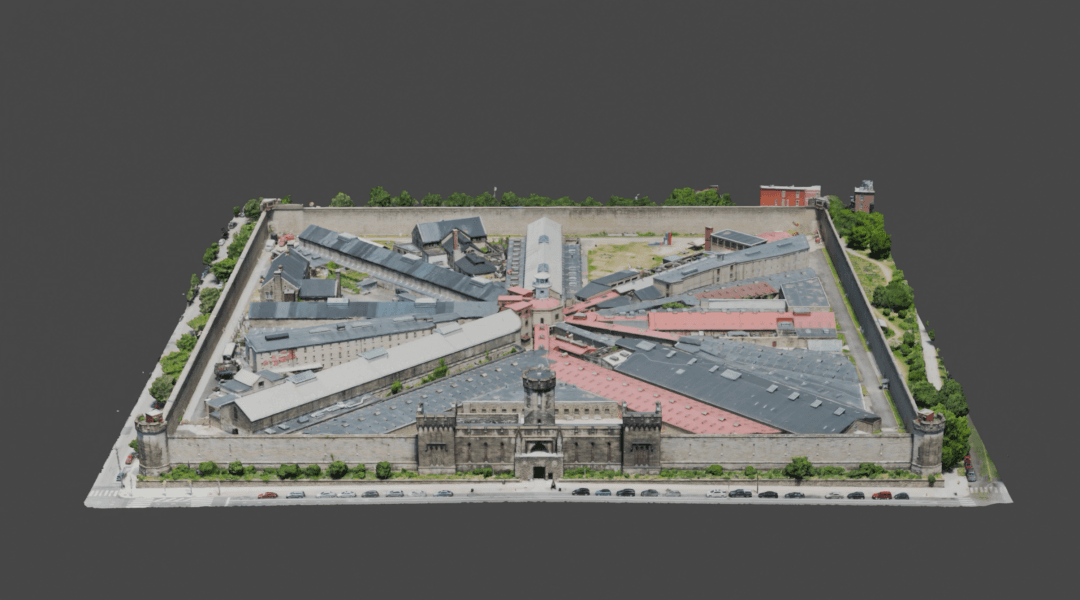
▲ Abandoned prison
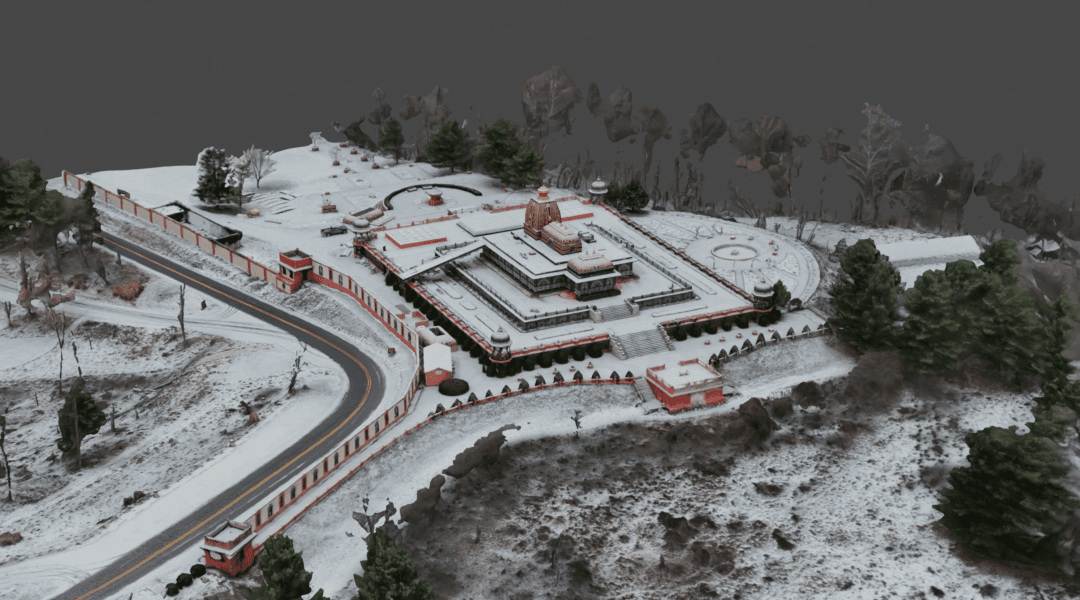
▲ Palace of a cult
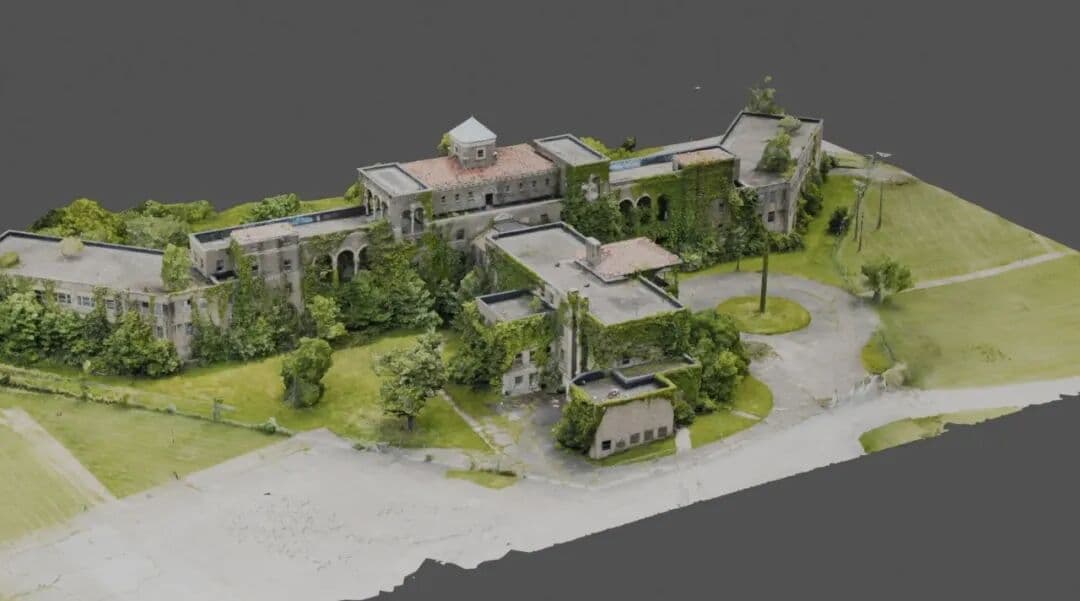
▲ Tuberculosis hospital
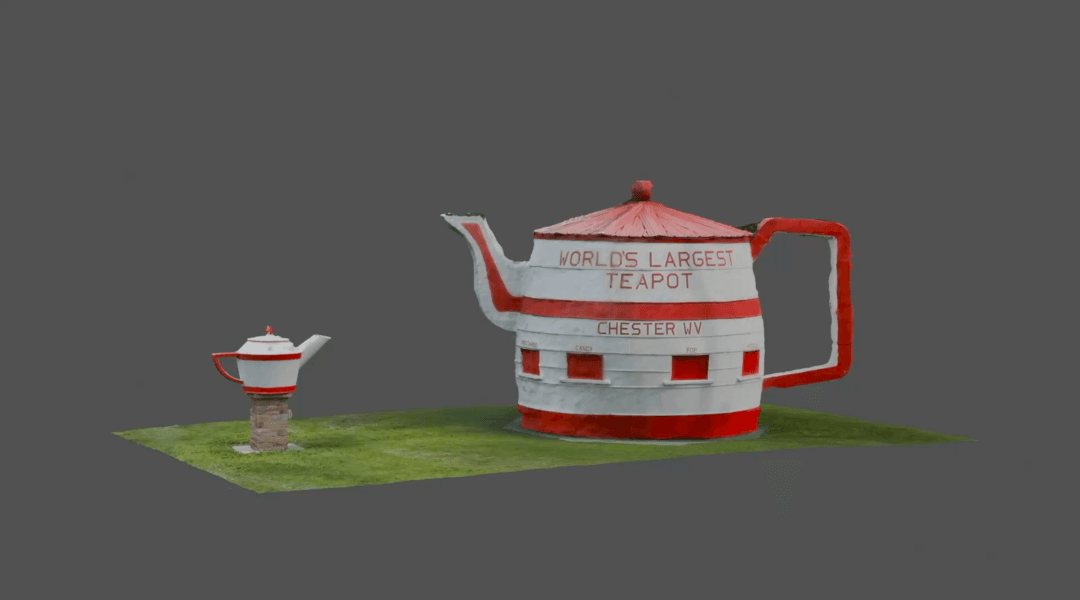
▲ Teapot and teacup soliciting business along the highway
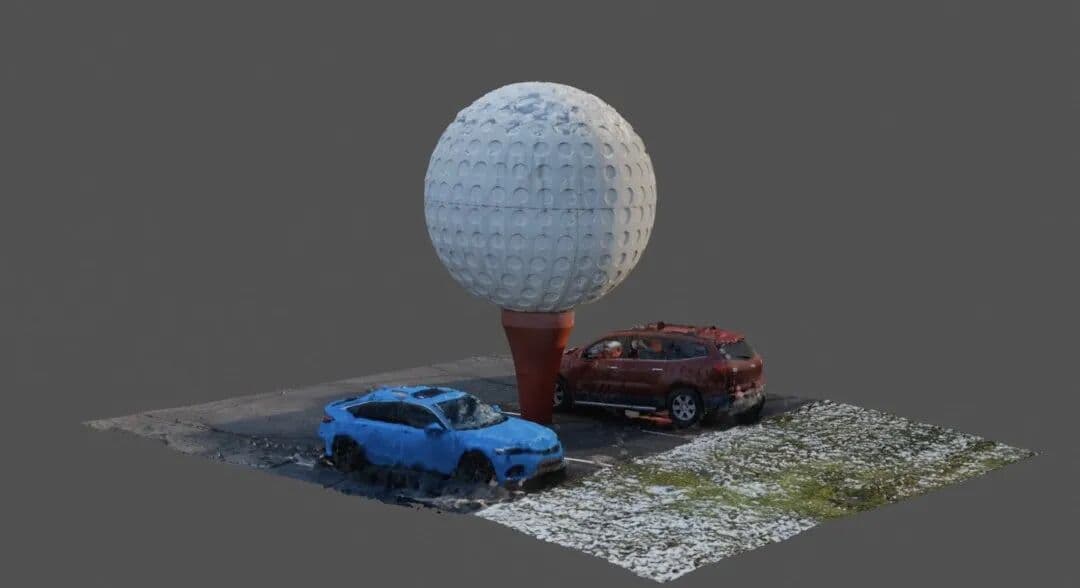
▲ Golf-ball-shaped building
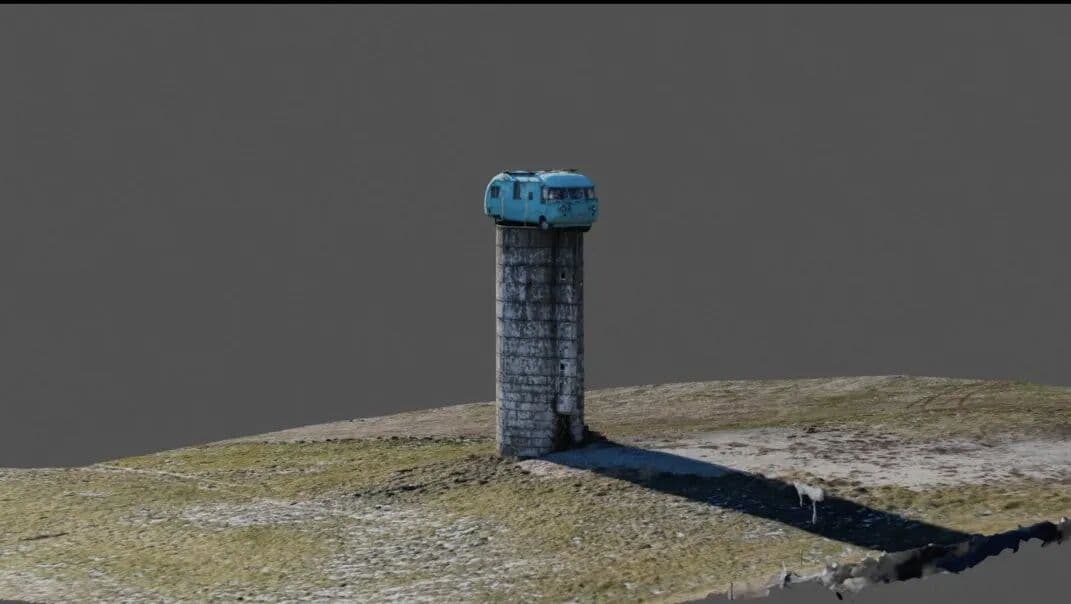
▲ Vintage car fixed to a pillar, with Santa Claus in the driver's seat
We use algorithms to reconstruct the photos we take into 3D models, publish them on the internet, and diligently collect all existing materials to write stories. We named this museum, which will never be completed and records and preserves the physical world, Funes, 富内斯.

▲ Funes website homepage
It comes from Borges' story "Funes the Memorious". There is a young man named Funes who, after falling from a horse and becoming paralyzed, gains a nearly cruel superpower—his memory changes; his mind no longer holds concepts and names, but is reduced to infinite, irreducible details: every transformation of clouds, the texture of every leaf, the shift of sunlight in every moment, all perfectly preserved in his brain. He is also trapped in endless reality, overwhelmed by infinite details.
Recently, we have also been developing a mobile app that we are very proud of. It should be released to everyone after some time. It showcases ancient Chinese architecture photographed by our team, and its name is 'Between Beams and Pillars'.
Today, more and more friends are joining us in this mission that, though lacking utilitarian value, guides individuals to directly touch the real world. You can record any building that interests you, such as the pavilion downstairs from your home, the kindergarten from your childhood, or the theater you are in right now. As long as you take enough photos and give them to us, we will credit your name and publish them on Funes.
Building this museum, we have gathered far more than labor; it is personal intention. Last summer, a friend submitted a corner of a park that looked like nothing special. He said it was where he and his wife had their first date. I think if someone is willing to drive on a weekend afternoon to a place that doesn't even have a name, to photograph and record it, it must be because that place leads to his personal history, emotions, and dreams.
But I am ashamed to say that I cannot drive myself, so I have always been a burden to the team. Every time we go out, they drive, and I sit in the back seat, looking out the window. Gradually, all these things connected. I was born in 1986, catching the tail end of the pre-internet era. When I was a child, I scrimped and saved, skipping lunch to buy imported CDs and discs, amazed, frightened, or excited by the mysterious sounds, but not knowing what they were singing. I once mispronounced a singer's name, and it wasn't corrected until twenty years later, because I never had the chance to say it out loud.
When I was young, the world was vast and varied, owing me no explanation; the responsibility of exploration was entirely mine. Now the world is completely reversed, full of explanations, full of pre-arranged, planned feelings, howling and vying for my eyes, my tears, almost overflowing from the phone screen.
These prefabricated, direct feelings have eliminated the world itself that gives rise to subtle sensations. But I am already forty years old, and I have developed the habit of drilling into holes myself, like the blind men feeling the elephant in unfamiliar things. This habit is ingrained in my body and mind, hard to change.
This is also why I am very unaccustomed to the social culture prevalent today, which uses everything to focus on and perceive oneself, to care for one's own heart and emotions. Is a person's concern for the world a means or an end? Do we care about and invest in something, collect its information, savor it, understand it, because it gives us emotional value, or because it constitutes a symbol of our identity, or because it can help me gain more attention and affection from others? I think none of these.
The world is too big, I am too small. I will not choose to live a life where the Six Classics annotate me. I choose to look outward, and I believe that as long as I stop and linger anywhere, there is a hole waiting for me. Every inconspicuous corner leads to profound stories and connects to the vast world.

All architectural models and actual photos in the speech are courtesy of the Funes team, with special thanks to Liang Kaiwei for his assistance.
This article is compiled from the speech and the presentation.
策划丨酸
剪辑丨大凯